Industrial sewing machines: which type for which job
Lockstitch, triple feed, two-needle, post-bed, zigzag, overlock, coverstitch and automatic machines: what each type does and which listings in our catalogue to read for your work.
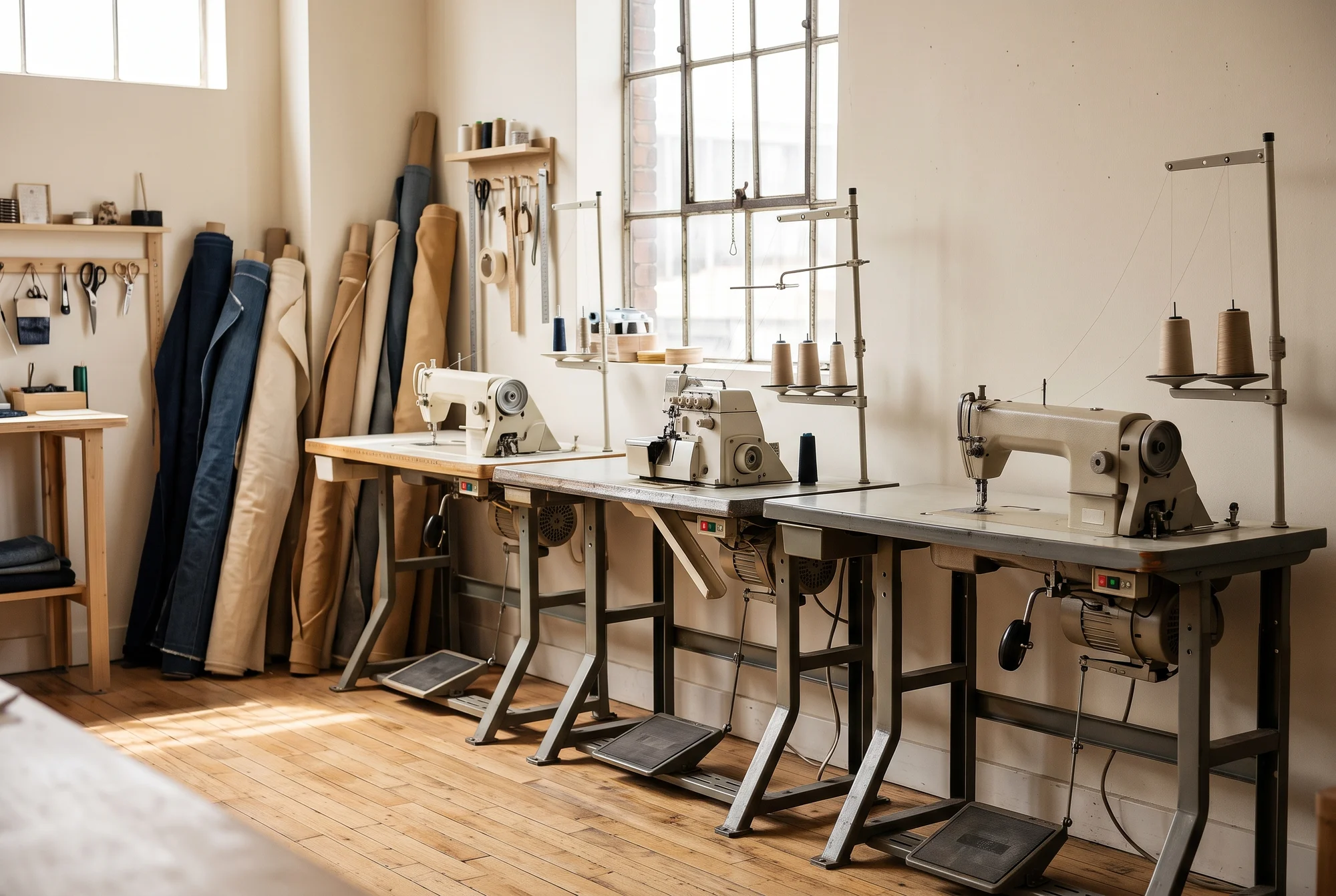
Industrial machines are not bigger versions of a domestic machine: each one does a single job, and choosing the wrong type costs more than choosing the wrong model. Decide the type first, based on what you sew, then read the listings. Here are the types we have in the catalogue, the work they are built for and the numbers the listings give you to compare them.
Straight seams: the lockstitch
The basic machine: straight stitch, one needle, nothing else. It is for shirts, trousers, curtains, everything sewn in a line. In our lockstitch category the Juki DDL-8700-7 states 30 kg, 450 W, 5000 stitches per minute and a presser foot that lifts up to 13 mm. The Dürkopp Adler 272-140342-01 weighs 51 kg, has 500 W, the same speed and 8 mm of lift. If you sew several layers, lift is the number that counts: the difference is in the comparison of the two.
Thick materials: triple feed
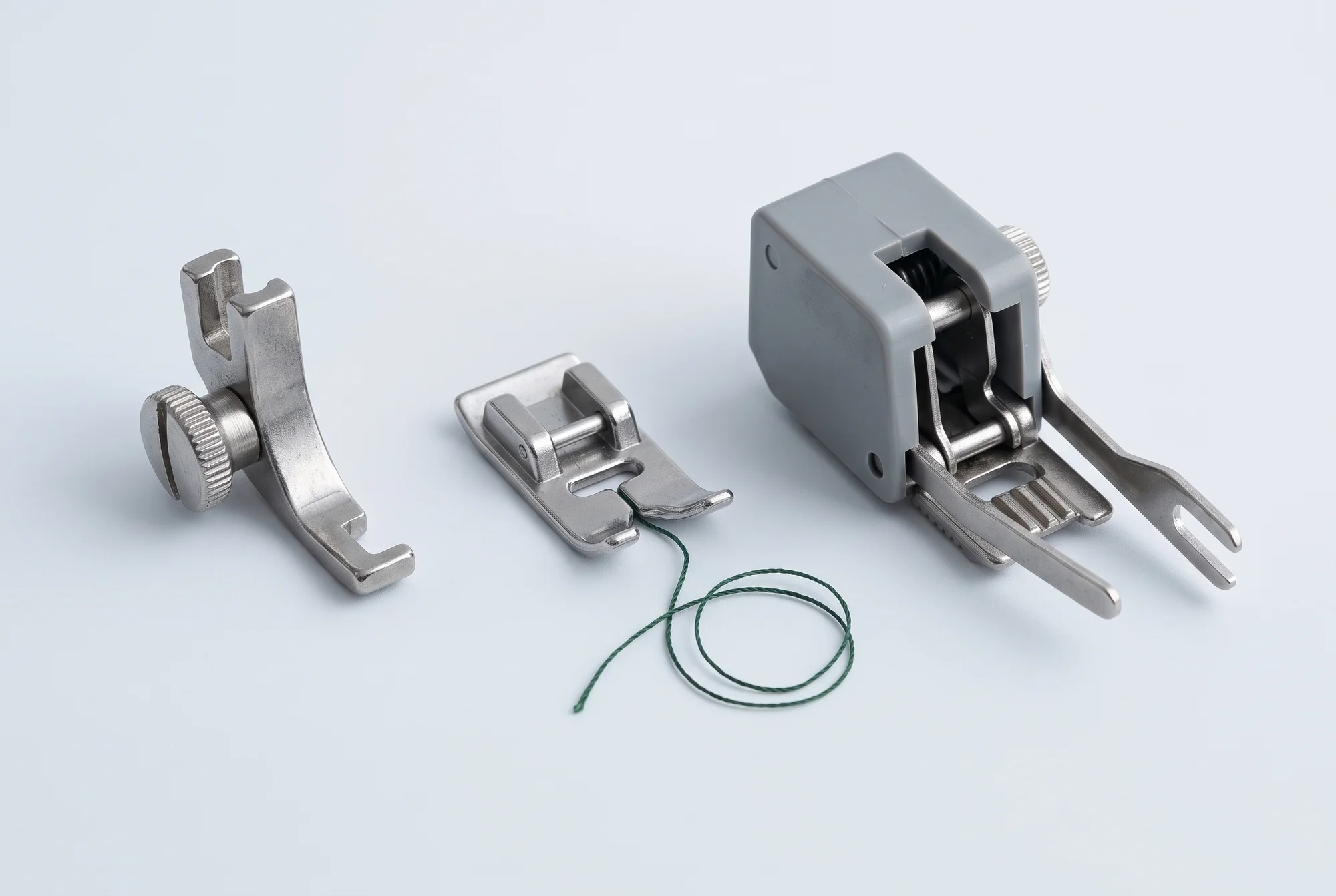
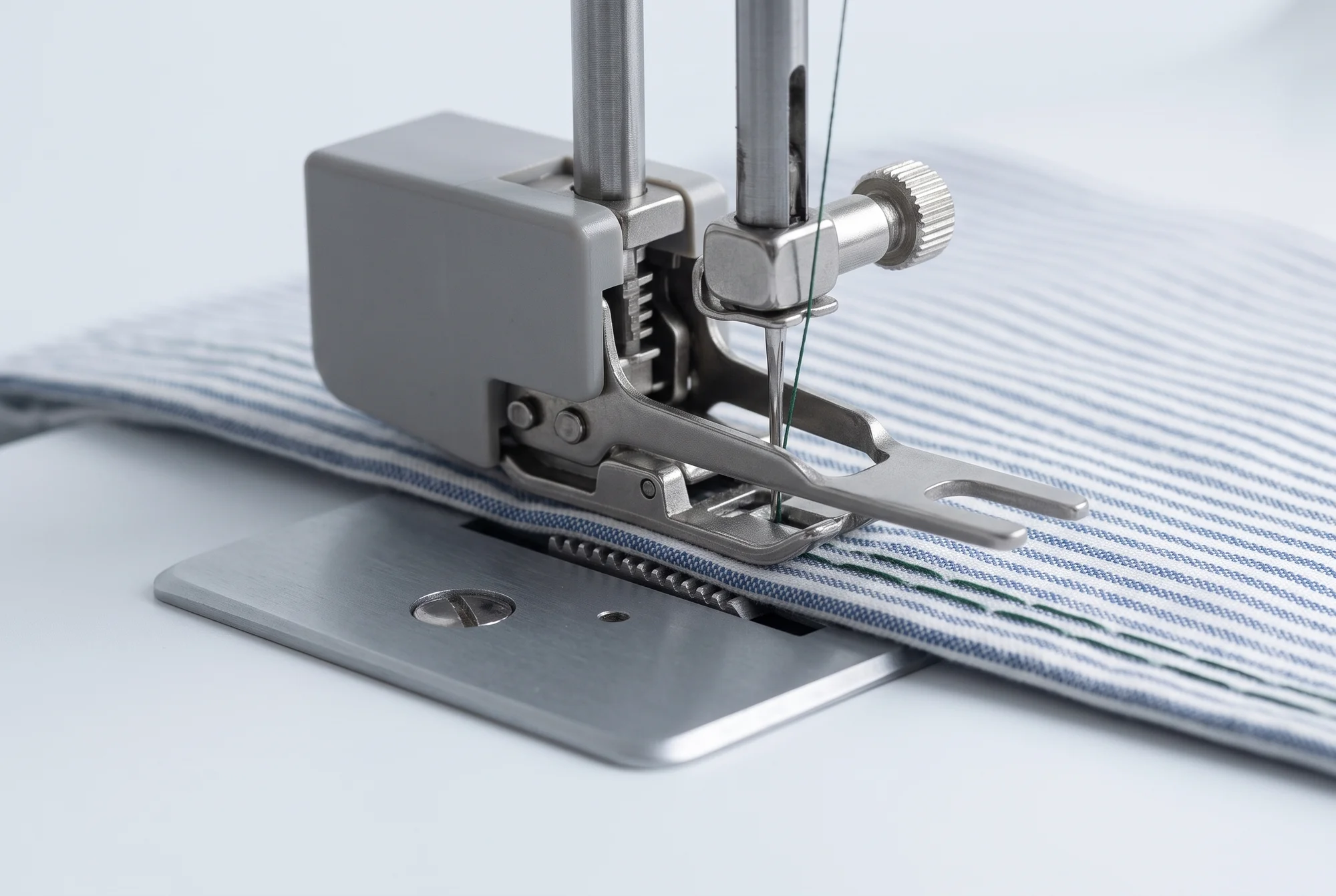
Here the fabric is moved by needle, foot and feed dog together, so the layers don't slide over each other. It is the type for leather, sailcloth, padding, webbing. We have four in the catalogue, and the power supply is the first thing to read:
- Dürkopp Adler H867-290362-70: 72 kg, 230 V, 375 W.
- Jack H2-A-CZ: 750 W.
- Pfaff 1245: 230 V.
- Sailrite Fabricator: 110 V. Mains in Europe is 230 V, so work out how you would power it before ordering.
If you work heavy fabrics regularly, start from this category and not from the plain lockstitch.
Double seams: two needles
Two needles sew two parallel rows in a single pass: decorative topstitching, reinforced seams on jeans and workwear. There is the Dürkopp Adler 867-490322-M, 59 kg and a stated footprint of 106 × 60 × 170 cm, then the Jack JK-58450J and the Juki LH-3568A-7. If you topstitch twice every day, the time saved against two passes with one needle is the reason to buy it. If you do it now and then, it isn't.
Work in the round: post-bed and cylinder
The post or the arm lets you slide the piece around the machine: shoe uppers, bags, sleeves, anything closed like a tube. In our post-bed and arm category there are the Dürkopp Adler 868-490322-M, 76 kg, the Juki PLC-2760-7, 84 kg, and the Jack S7. They are the heaviest of the tabletop machines: think about where you will set it up.
Zigzag, overlock, coverstitch
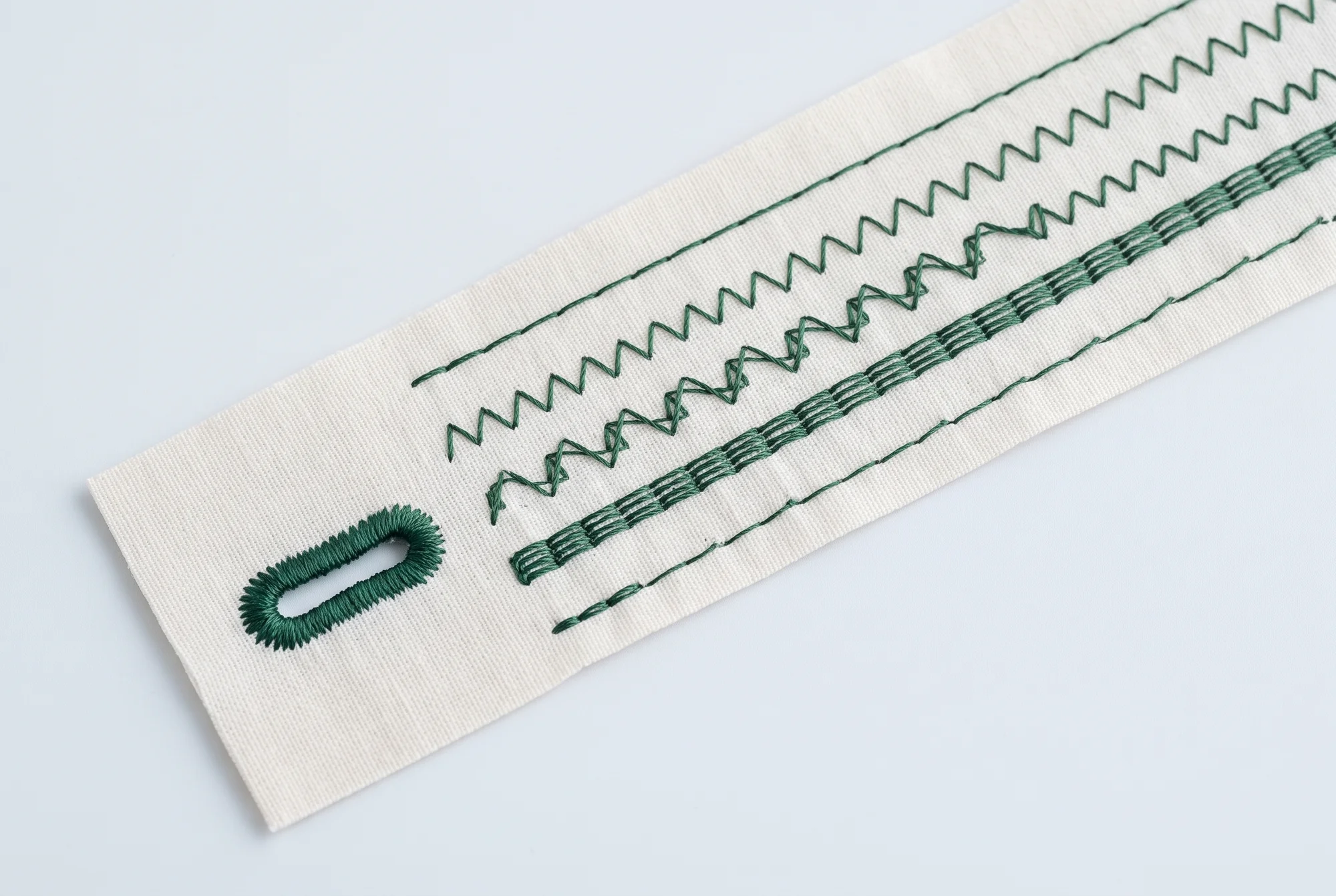
These are the types for finishing and for stretch. The Juki LZ-2290CF-7 is a zigzag machine at 49 kg and 330 W, and the Jack JK-2290D-SS is the other in the category. For a finished edge there is the Juki MO-6904S, an overlock. For hems and stretch seams with several threads the Juki MF-7500-U11/UT is a coverstitch machine. If you sew jersey in volume, coverstitch and overlock go together: one doesn't replace the other.
The automatics
Programmable machines for repeated seams, such as buttonholes or bartacks, are another world. The Juki AMS-221EN-HS2516 states 197 kg, 120 × 100 × 120 cm and 200-240 V at 450 W. It only makes sense for series production: for a workshop that does different things every day, it doesn't.
How to decide
Start from the material: heavy or many layers, triple feed. From the gesture: double row, two needles; piece closed like a tube, post-bed. From the finish: zigzag, overlock or coverstitch. The lockstitch remains the reference when all you need is the straight seam.
Before choosing, always check weight, power supply and footprint on the listing. Our listings carry no prices: ask the seller what the offer includes, for example table and motor.