How many stitches you really need: straight, zigzag, buttonhole and stretch stitches
Thirty stitches or a thousand? For hems, clothes and jersey, a handful are enough, as long as they're the right ones. Which stitches actually do the work, why the number on the box says little, and what to look at instead.
Sewing machine spec sheets put the stitch count right at the top: 23, 60, 200, sometimes more than a thousand. It's natural to assume more stitches means a machine that does more. For almost everything you'll actually sew, though, what matters is having about a dozen precise stitches, and how well they're made. The rest are decorative stitches and letters, useful if you're after them.
The stitches that do the work
Let's start from what you want to sew. These are the stitches that come up in every project, under the name you'll find in our encyclopedia.
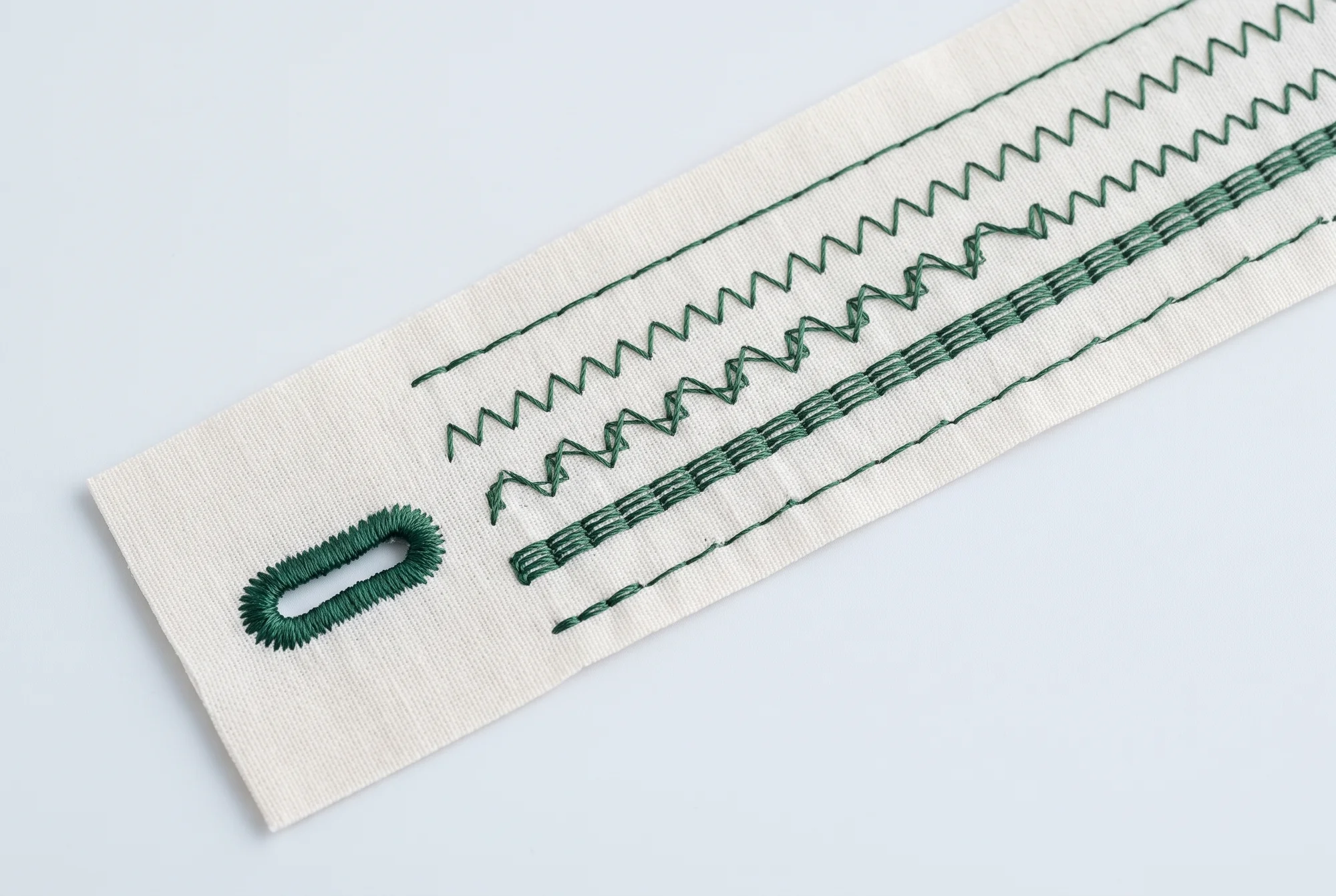
- Straight stitch: the stitch behind every seam. The needle thread and the bobbin thread lock together halfway through the fabric. It holds well, but stretches little.
- Zigzag: finishes edges that fray, sews on buttons and elastic. With a very short stitch length it becomes satin stitch.
- Buttonhole: the opening for a button. Machines make it in one pass, measuring the button in the foot, or in four, turning the selector for each side.
- Blind hem stitch: the hem that's almost invisible from the right side, for trousers and skirts. Brother offers it in two versions, for non-stretch and stretch fabrics.
Then there are stretch stitches, needed as soon as you sew jersey, knits or swimwear: the seam has to stretch with the fabric without breaking the thread.
- Triple stretch straight stitch: a straight stitch that goes forward and back, for seams on fabrics that stretch.
- Three-step zigzag: each leg of the zigzag is made of three small stitches; it lies flat. Brother recommends it for attaching elastic and for mending.
- Triple stretch zigzag: each leg is stitched over three times, for heavy knits. Not to be confused with the previous one, even though the names are similar.
- Stretch overlock stitch: joins and finishes the edge in one pass, but without trimming it the way an overlocker would.
The sewing magazine Seamwork sums it up like this: if you don't plan to use many decorative stitches, only a few are needed to make a garment; for the vast majority of home sewists, straight stitch, zigzag and buttonhole are enough, and Seamwork adds one stretch stitch and a mock overlock stitch.
Why the number says little
The first reason is that every manufacturer counts its own way. SINGER, on the spec sheet of one of its machines, states 32 built-in stitches and 110 "Stitch Applications," and explains that an application is a technique you do with a stitch: not 110 stitches. HUSQVARNA VIKING gives two figures for the same machine, 208 utility and decorative stitches and 565 "stitches in total," counting letters and characters. Comparing two spec sheets on the number alone means comparing different things.
The second is that names change from brand to brand. The three-step zigzag, for Brother, is the "Elastic Stitch," and its restitched zigzag is called "Triple Zigzag Stretch." To know whether a machine has the stitch you need, you have to look at the stitch diagram in the manual's table, not the name.
The third, and most important, is that the useful stitches arrive early. You can see it clearly in the catalogue.
What our catalogue says
As of 19 September 2026, of the 46 published sewing machines, 41 state their stitch count: it ranges from 1, on a straight-stitch machine, to 1,753. For each machine we also recorded which of the stitches listed above the manufacturer declares, by reading manuals and spec sheets: 57 of 58 machines do, counting sewing and embroidery combos.
| Machines | How many | Declare straight, zigzag, blind hem and at least one stretch stitch |
|---|---|---|
| Up to 40 stitches | 21 | 17 |
| 100 stitches or more | 27 | 27 |
The four low-stitch-count machines that fall short of this minimum are two minis, one straight-stitch machine and one mechanical machine with twelve stitches. And if you look at all eight stitches in the list, 6 machines with 40 stitches or fewer declare them, and so do 6 with 100 or more: the same number.
One caution: these figures say what manufacturers write down. If a stitch doesn't appear, the machine may still have it under a name that doesn't let you recognise it. And these are figures from our catalogue, not the market.
What to look at instead of the number
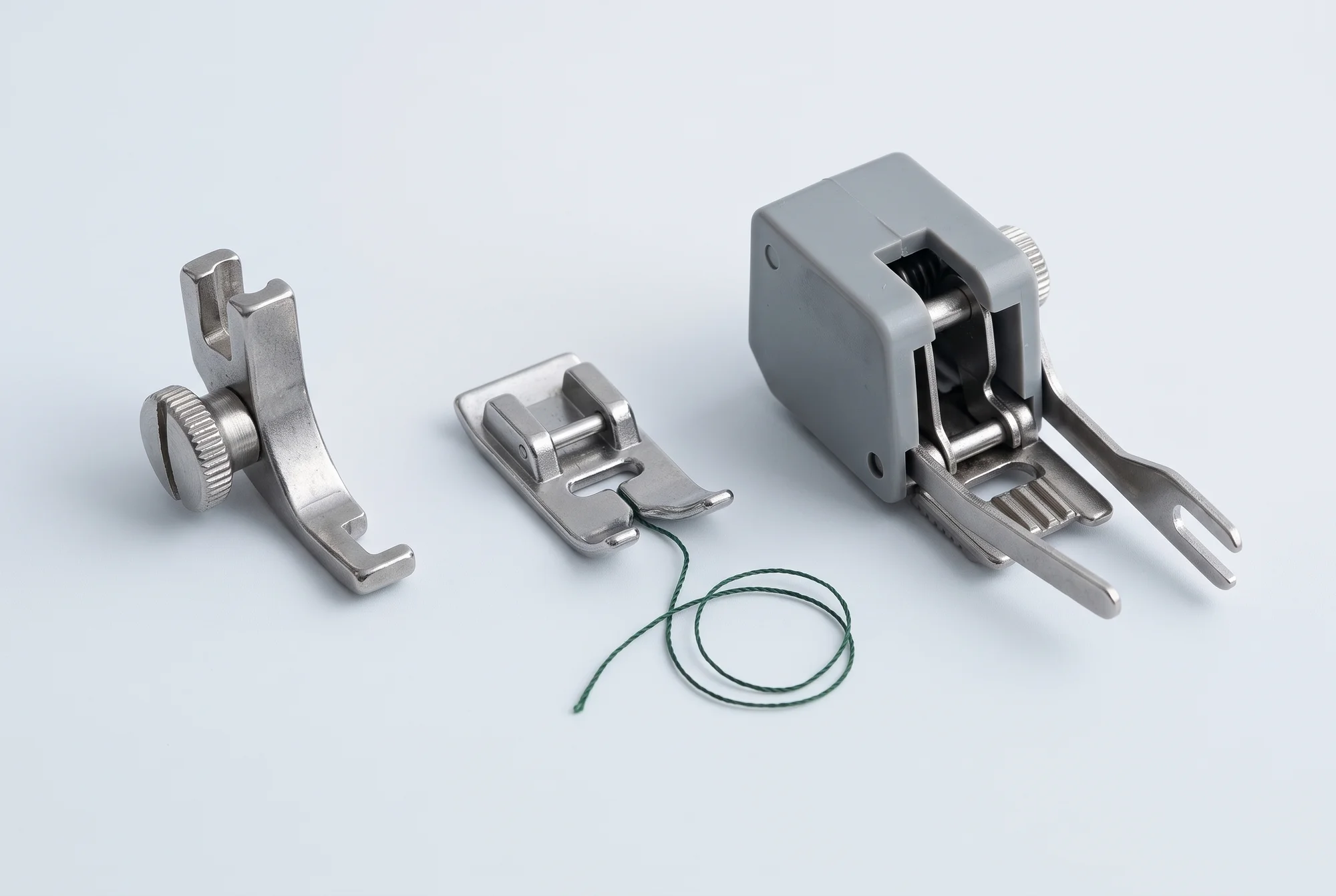
- Maximum stitch width. This decides how wide the zigzag or satin stitch can be. Janome lists three typical widths, 5, 7 and 9 mm; a 5 mm machine makes the same stitches as a 9 mm one, just narrower. It also matters for presser feet: see the guide on shank and presser foot attachment.
- The buttonhole. In one pass it's faster and every buttonhole comes out identical; in four passes it takes more care to match the sides. Of the 44 spec sheets in the catalogue that state it, 37 make it in one pass, 5 in four, and 2 don't make one at all.
- Stretch stitches, if you sew jersey: at least the triple straight stitch and one of the two stretch zigzags.
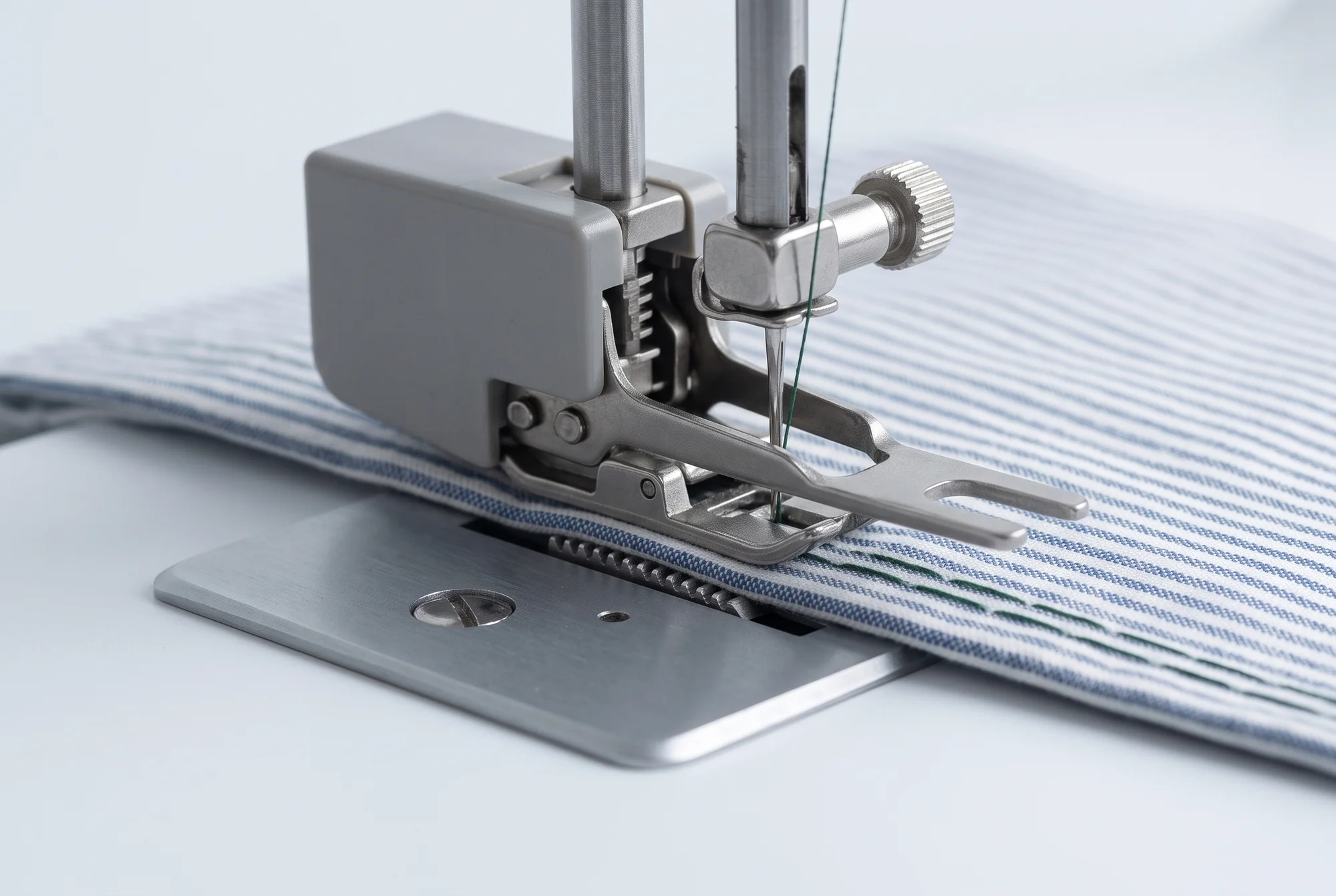
- Feed, which isn't a stitch but decides how all the others come out: see the guide on fabric feed.
The overlocker's stitches are a different matter
The overlock stitch on a sewing machine imitates an overlocker's finish, but it doesn't trim the fabric: the seam allowance has to be trimmed separately. A true three-thread overlock stitch is made with two loopers and a knife, on a different machine. If you're wondering whether you need one, see the guide do you need an overlocker?.
How to decide
- Hems and repairs: straight stitch, zigzag and blind hem. Almost every machine has these.
- Clothes in non-stretch fabric: add a one-step buttonhole.
- Jersey and knits: add the stretch stitches; the rest is in the guide sewing jersey.
- Quilts: straight stitch matters more than anything else, along with dual feed.
- Decorative stitches and letters: here the number starts to matter, but check how it's counted. If you're thinking of embroidery, read how to choose an embroidery machine.
If you're not sure yet what you'll be sewing, start from what do you want to sew.
Sources
- Brother, instruction manual with the stitch table (PDF) — Source 1
- Brother, instruction manual with a four-step buttonhole (PDF) — Source 2
- SINGER, page for a machine with 32 stitches and 110 «Stitch Applications» — Source 3
- HUSQVARNA VIKING, page for a machine with the two stitch counts — Source 4
- Janome, «What Kind of Janome do I have?», maximum stitch width (PDF) — Source 5
- Seamwork, «The Ultimate Guide to Buying a Sewing Machine» (sewing magazine, secondary source) — Source 6
Three examples from the catalogue
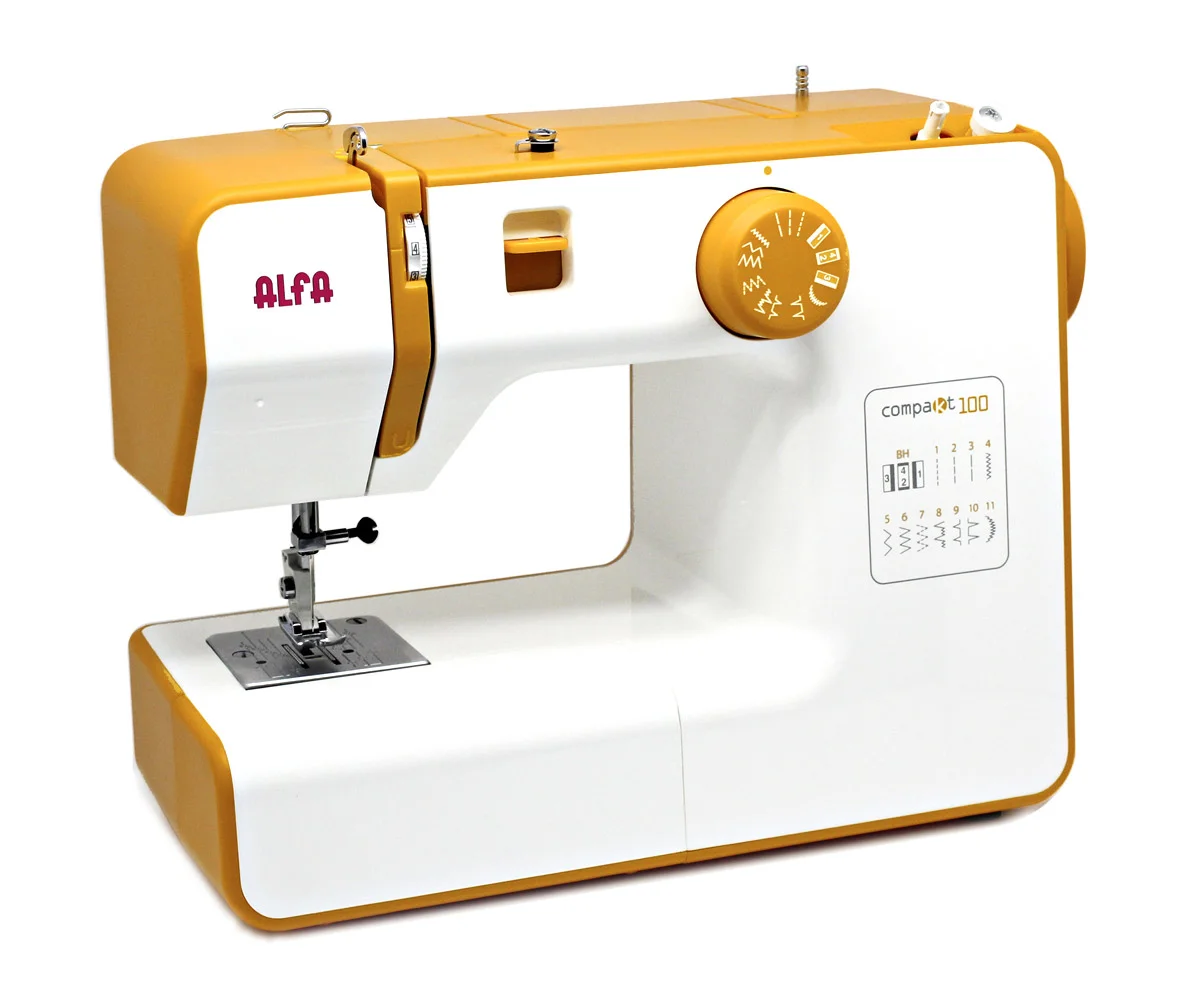
Why it's here Stitch types: Three-step zigzag · manufacturer's source
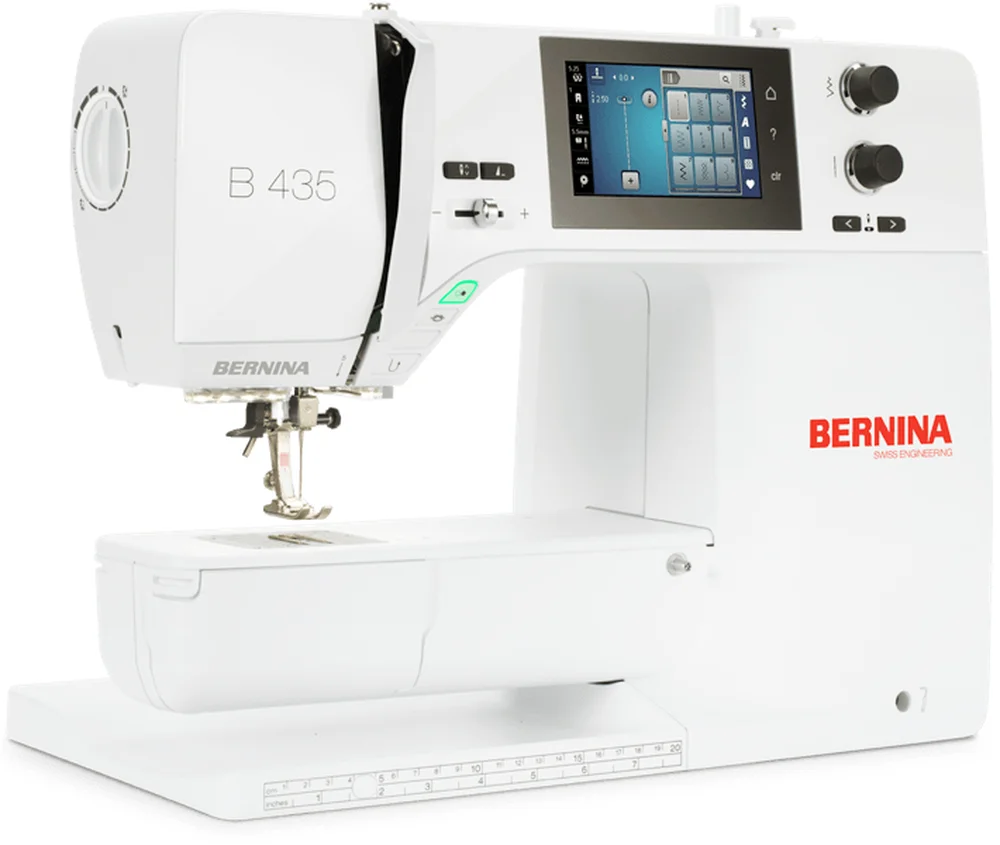
Why it's here Buttonhole type: One-step · manufacturer's source
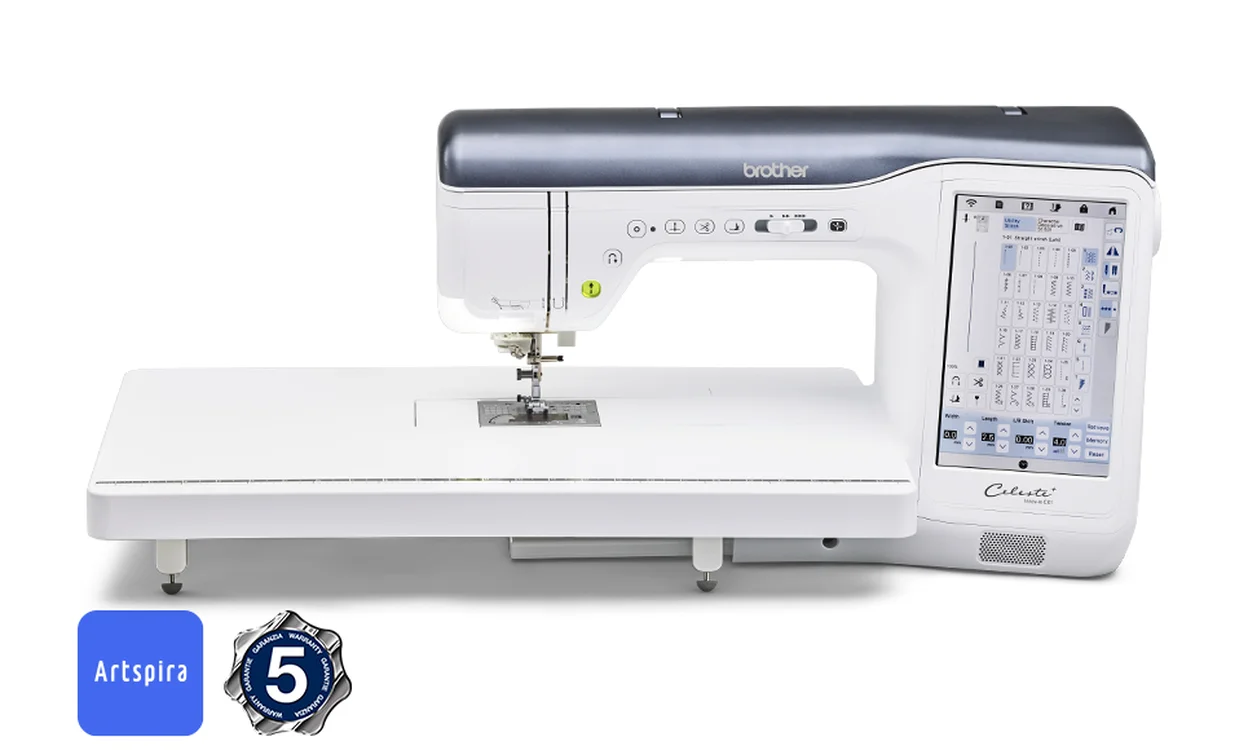
Why it's here Stitch types: Triple stretch zigzag · manufacturer's source