Fabric feed: feed dogs, dual feed and presser foot pressure
Stripes that stop lining up, jersey that comes out wavy, faux leather that stalls under the foot: it's almost always a matter of feed. What feed dogs, dual feed and presser foot pressure actually do, according to the manuals.
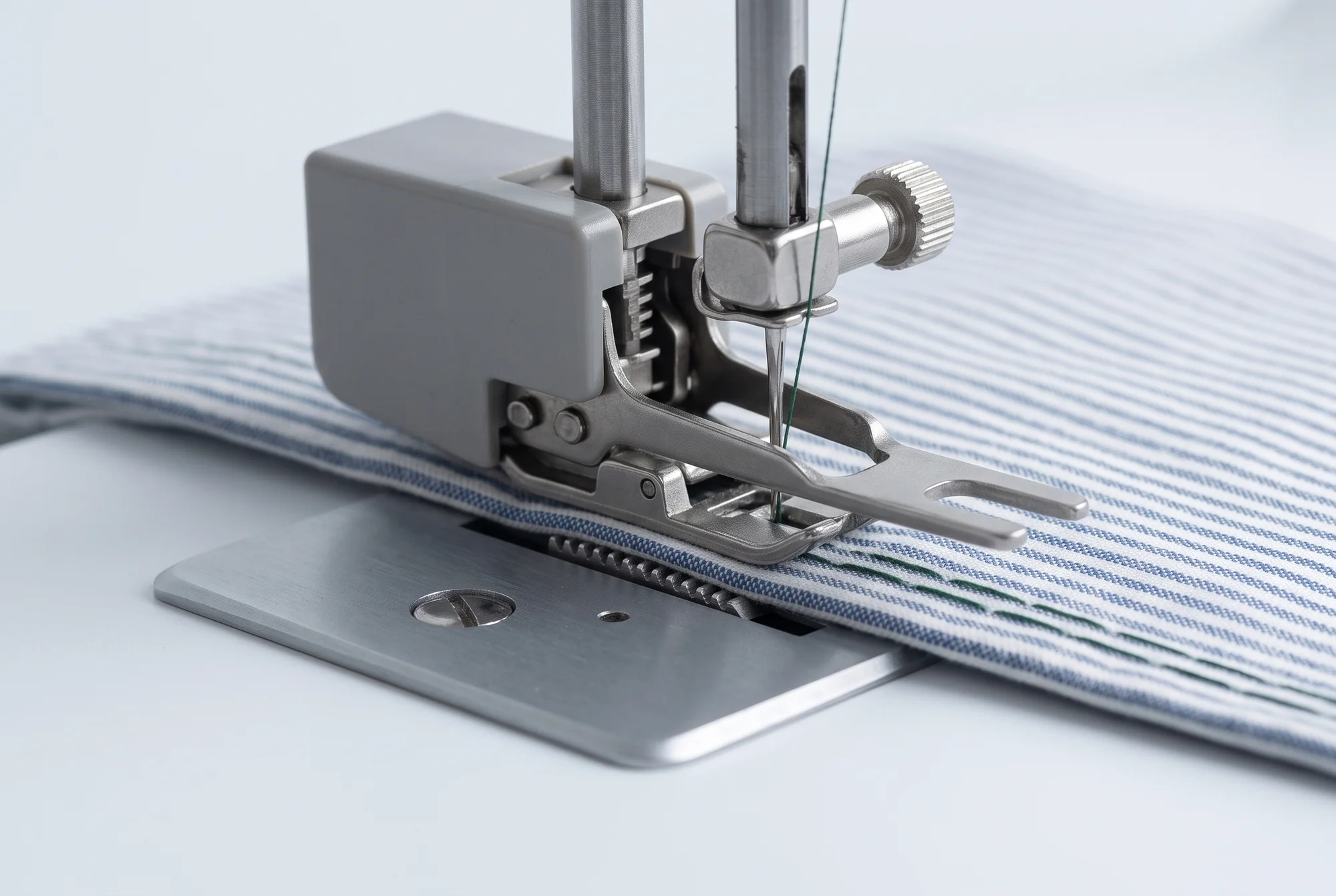
You sew two striped panels, pinned carefully, and by the end the stripes no longer line up: the top layer has moved less than the bottom one. Or the jersey comes out wavy, the faux leather stalls under the foot, the velvet slides away. It isn't always your fault, or the machine's: it's how the fabric gets carried forward, and there are three settings that change things.
How the fabric moves forward
Under the needle plate are the feed dogs: rows of metal teeth that rise, push the fabric toward the back, and drop again, one stitch at a time. Above sits the presser foot, which presses the fabric against the feed dogs so it doesn't move at random.
The weak point lies in this division of labour: the feed dogs only touch the bottom layer, while the top layer is just held down by the foot. With two fabrics that feed well, everything goes smoothly. With slippery, thick, napped or stretchy fabrics, the top layer lags behind or gets stretched. PFAFF says as much about its dual feed, which also prevents "the stretching of upper layers" in quilts.
Spec sheets also state how many rows the feed dogs are divided into: in our catalogue this ranges from 3 to 7. None of the sources we read explains how much difference this makes, so it isn't a figure to choose by.
When to drop the feed dogs
Many machines let you drop the feed dogs. Janome's manuals call for this to sew on buttons and to baste with the darning foot; PFAFF for darning and free-motion sewing. In all these cases, you're the one moving the fabric. For normal sewing, both warn, the feed dogs must stay up. As of 19 September 2026, of the 46 published sewing machines in our catalogue, 21 state that the feed dogs drop; the others don't say, which doesn't mean they can't.
Dual feed
Dual feed adds a second feed mechanism above the fabric, moving in step with the feed dogs. Janome explains it like this: the fabric is caught between the upper and lower feed, and doesn't slip or pucker. It comes in two forms.
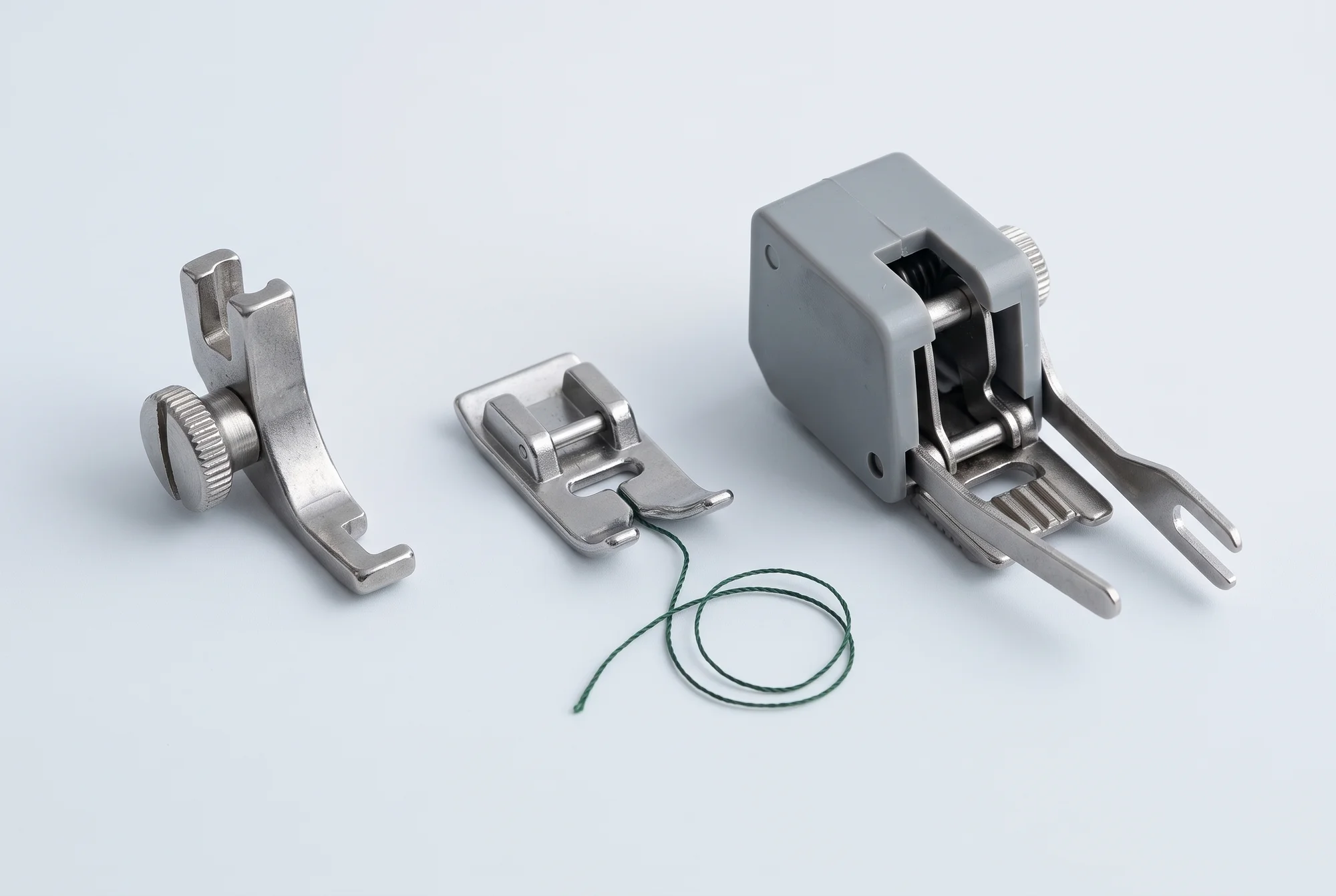
The walking foot is a large, heavy accessory that fits in place of the foot holder, directly onto the presser bar, with a lever that rests against the needle clamp screw. Because of this, it has to be bought for your type of attachment (see the guide on shank and presser foot attachment) and for your stitch width: Brother sells its version "for machines with a 7 mm stitch width." Brother also warns it shouldn't be used in reverse, with stitches that shift sideways, or with certain built-in stitches.
Built-in dual feed is an arm that sits behind the foot, lowering when needed and lifting when it isn't. Every brand calls it something different:
| Brand | Name | What it requires |
|---|---|---|
| PFAFF | IDT | Feet with the central rear notch |
| Bernina | Dual Feed | Feet with a D in the name |
| Janome | AcuFeed | Machines with AcuFeed are high shank |
| Brother | Mechanical Dual Feed, Direct Dual Feed | — |
In our catalogue, of the 46 published sewing machines, 6 state a built-in dual feed and 6 a walking foot included in the box; among the 12 combos, 4 have it built in.
When you actually need it
Manufacturers largely agree on which fabrics call for it.
- Janome recommends the walking foot for lightweight fabrics, knits, and real or faux leather.
- PFAFF writes that on light fabrics like silk or rayon it prevents seam puckering, that it matches up plaids and stripes, and that it keeps quilt layers aligned.
- Bernina lists the difficult fabrics: velvet, towelling, jersey sewn crosswise, faux fur, fleece, wadded fabrics, stripes and plaids, curtains with a repeating pattern. For "sticky" fabrics such as faux leather and coated fabrics, it also suggests a non-stick sole foot.
If you sew quilts, striped fabrics or jersey, this is one of the things that matters most in a machine. If you mostly sew medium-weight cotton and linen, you can do without it.
Presser foot pressure
Presser foot pressure is the force with which the foot presses the fabric against the feed dogs. Many machines let you adjust it with a dial or from the display: in our catalogue, of the 25 sewing machines that state this, 21 declare it adjustable and 4 don't.
Here the manuals disagree, and it's worth knowing.
- Janome: pressure 3 for normal sewing, 2 for appliqué, basting and embroidery, 1 for chiffon, lace, organza and sheer fabrics; velvets and very stretchy knits may also need 1.
- Bernina: reduce the pressure for tricot and loose knits, increase it for dense materials. On thick fabrics it recommends reducing it, so the fabric moves more freely; on thin fabrics, increasing it, so it doesn't shift too much under the foot.
On knits, both say to lower it. On thin fabrics, one says lower it and the other says raise it. The practical rule that remains is to test on a scrap of the same fabric, starting from the setting your manual indicates.
The overlocker has an extra feed
The overlocker has differential feed, adjusted with a ratio: Juki, for example, states a range of 0.7 to 2.0. It's there, Juki writes, to properly sew fabrics that stretch easily, such as jersey and georgette. In our catalogue, 13 of 21 overlockers and coverstitch machines state it. To find out whether you need an overlocker, see the guide do you need an overlocker?.
How to decide
- Quilts, stripes, plaids, fabrics that slip: dual feed, either built in or as a walking foot compatible with your machine.
- Jersey: adjustable presser foot pressure and, if possible, dual feed; the rest is in the guide sewing jersey and the entry on jersey.
- Leather and faux leather: dual feed or a non-stick foot; also see the entry on leather.
- Darning, buttons, free-motion sewing: feed dogs that drop.
- Medium-weight fabrics, simple seams: the feed dogs are enough; adjustable pressure is a nice extra.
Sources
- Janome, instruction manual with a walking foot and drop feed dogs (PDF) — Source 1
- Janome, instruction manual with the pressure dial (PDF) — Source 2
- Janome, «What Kind of Janome do I have?», accessory guide (PDF) — Source 3
- PFAFF, user manual for the select line, «The IDT system» (PDF) — Source 4
- PFAFF, «The IDT System» — Source 5
- BERNINA, user manual for a series 5 machine, «BERNINA Dual Feed» and presser foot pressure (PDF) — Source 6
- BERNINA, user manual for a series 4 machine (PDF) — Source 7
- WeAllSew (BERNINA), universal presser feet and the letters C and D — Source 8
- Brother USA, walking foot for 7 mm machines — Source 9
- Brother Europa, spec sheet for a machine with «Direct Dual Feed» — Source 10
- JUKI, page for a domestic overlocker, differential feed — Source 11
Three examples from the catalogue
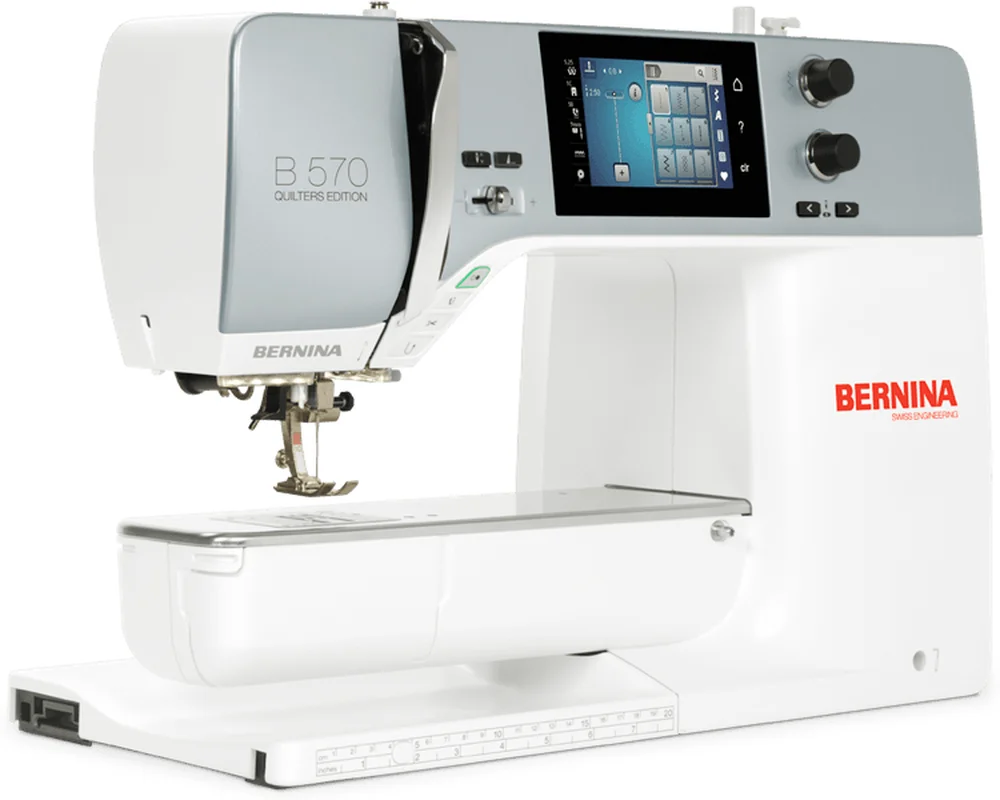
Why it's here Dual feed / walking foot system: Integrated in the machine · manufacturer's source
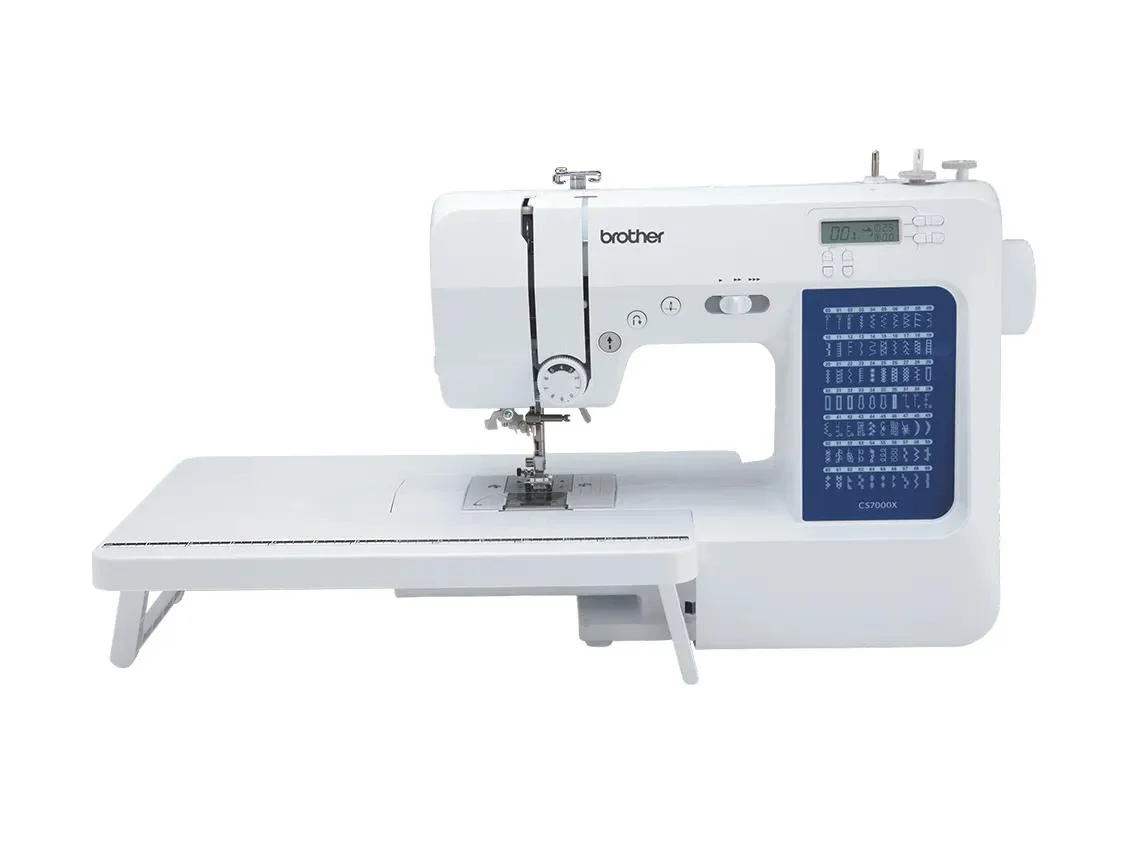
Why it's here Dual feed / walking foot system: Walking foot included · manufacturer's source
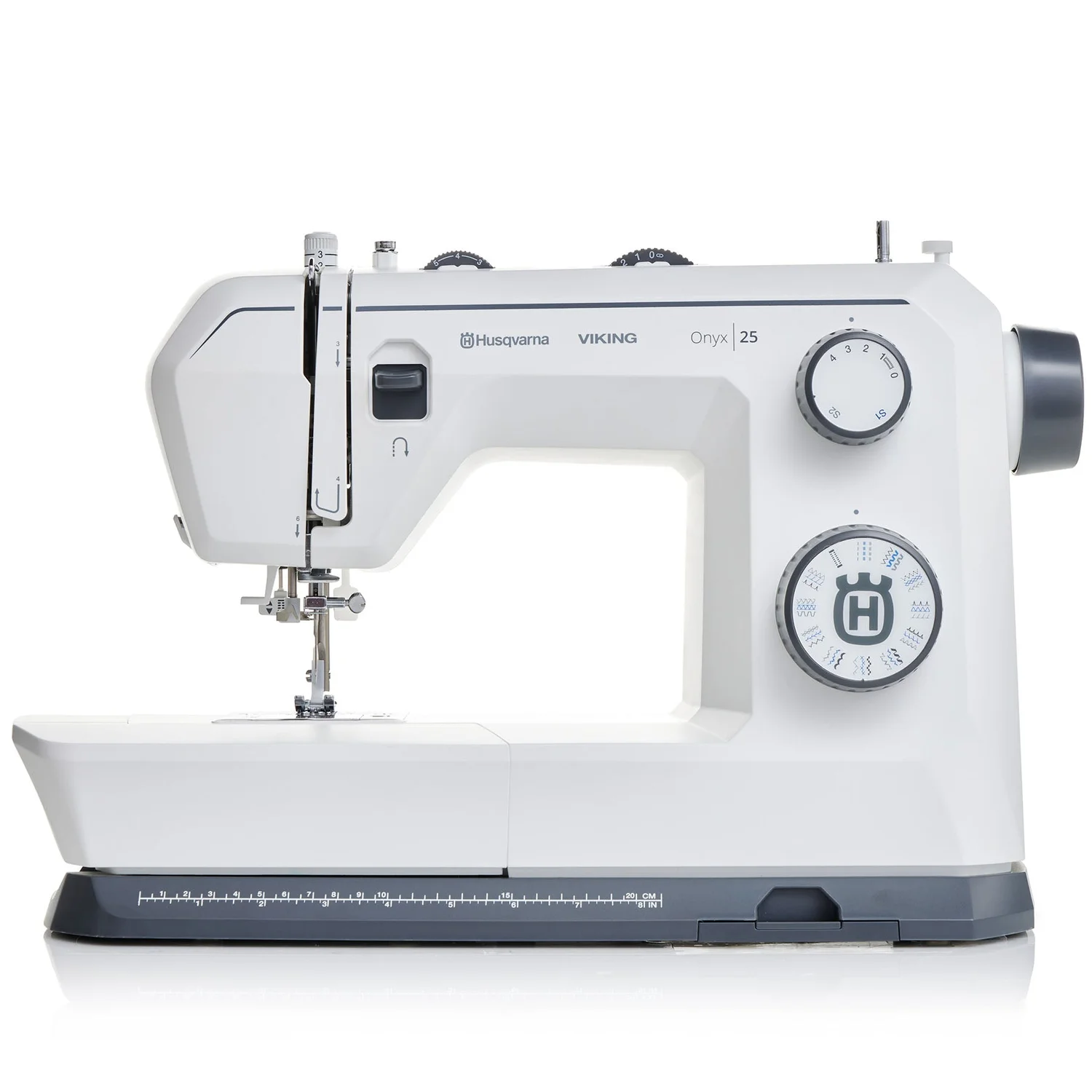
Why it's here Adjustable presser foot pressure: Yes · manufacturer's source