Do you need an overlocker? Overlockers, coverstitch and combos
An overlocker trims, sews and finishes the edge in one pass, and it makes a real difference with jersey. But it doesn't replace the sewing machine, and t-shirt hems are a different machine's job.
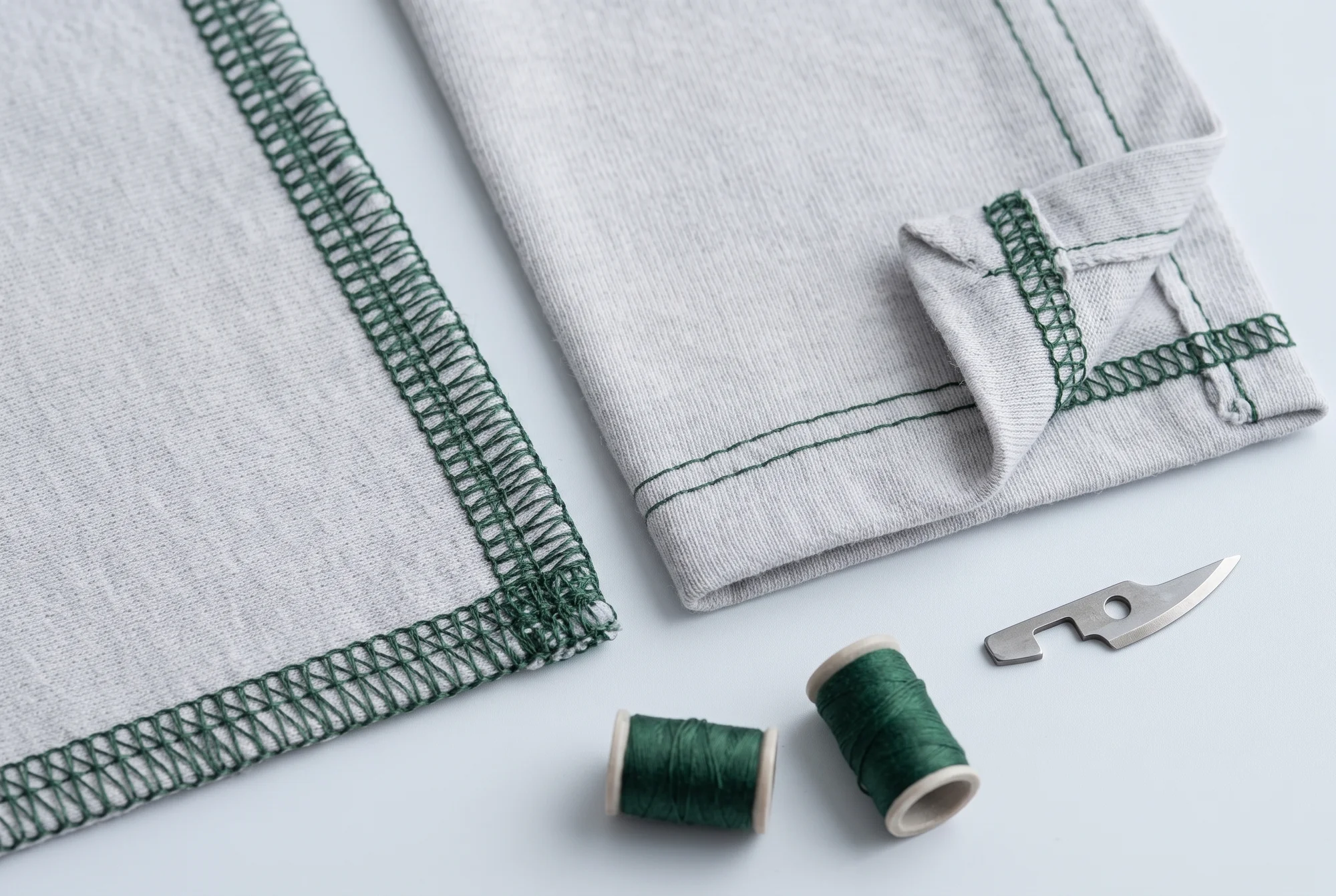
Look inside a t-shirt bought from a shop and you'll see two things your sewing machine doesn't do: edges wrapped in a web of threads, and a hem with two rows of straight stitches on the front. They're the work of two different machines: the overlocker and the coverstitch machine. Understanding what each one does tells you whether you need one, and which.
What an overlocker does
The overlocker (also called a serger) does three things in the same pass. Stiftung Warentest describes it like this: it trims the fabric, finishes its edge, and sews the pieces together. WeAllSew, Bernina's blog, adds the reason why: the stitch wraps around the raw edge and stops it from fraying.
To do it, it has parts a sewing machine doesn't:
- a knife that trims the edge just before the needle;
- two loopers, arms that each carry a thread around the edge of the fabric;
- one or two needles, for a total of three or four threads.
The stitches it produces are different, and each has its own use. The three-thread overlock stitch finishes and joins two layers; the four-thread version, half coverstitch or full coverstitch, adds a row of stitching that makes the seam sturdier; the two-thread overlock stitch finishes an edge but won't hold a seam. WeAllSew also lists, among the most-used stitches, the two-thread rolled hem, for lightweight fabrics, and the flatlock stitch, which joins without adding bulk.
Differential feed
This is why an overlocker sews jersey without leaving it wavy. Under the foot there are two sets of feed dogs (the teeth that move the fabric forward), one in front and one behind, and you can run them at different speeds. Brother explains it like this:
- at 1.0 the two sets move at the same speed;
- above 1.0 the front one moves faster and gathers the fabric: it removes the wavy look on knits, and at the extreme it puckers it up;
- below 1.0 the front one moves slower and stretches the fabric: useful on light fabrics that pucker.
Brother warns against using it on thick, non-stretch fabrics like denim. As of 19 September 2026, of the 21 overlockers and coverstitch machines in the SewingSpecs catalogue, 13 publish the maximum differential feed value, between 2.0 and 2.25.
What it doesn't do: an overlocker doesn't replace the sewing machine
Stiftung Warentest puts it bluntly: overlockers can't replace a sewing machine, because they don't mend and they don't sew in zips or pockets. And having no bobbin, they can't make the lockstitch, the one behind topstitching and the buttonholes of a sewing machine.
The reverse, though, is partly possible: a sewing machine can join and finish jersey with the stretch overlock stitch, which imitates an overlocker without the knife (the seam allowance is trimmed afterwards with scissors). It's slower, but it works: see Sewing jersey.
That's why an overlocker is your second machine, not your first. Cucicucicoo says as much to beginners: it's very useful once you have more experience, but don't think about it at the start, because it's used differently from a regular machine.
The coverstitch machine
The t-shirt hem, two rows of straight stitches on the front and a web of threads on the back, isn't the work of a regular overlocker. That's the coverstitch: two or three needles on top and a looper underneath, joining the rows and covering the back. WeAllSew points out the difference from an overlocker: with coverstitch, the fabric isn't cut.
The variants are the two-needle coverstitch, wide or narrow, the three-needle coverstitch and the single-needle chain stitch. You'll find them among coverstitch machines.
Combo machines
Combo machines do both overlock and coverstitch on the same machine. Some also do the five-thread safety stitch, which Pfaff lists as a "5-Thread Safety Stitch": a chain stitch that holds and an overlock stitch that finishes, in one pass. They take up the space of a single machine.
The price of that convenience is switching between functions: before buying one, check the manual, if the manufacturer publishes it as a PDF, to see what has to change to go from overlock to coverstitch, and ask yourself how many times you'll do that in an afternoon's work.
Three things to check before buying
- Looper threading. Some manufacturers thread the loopers with a jet of air: Baby Lock calls it "Jet-Air Threading," Pfaff "Air-Threading Loopers." As of 19 September 2026, of the 15 machines in the catalogue that state their threading type, 8 do it with air.
- Needles. According to Schmetz, many recent domestic overlockers use the same universal 130/705 H needles as sewing machines; others call for a special system, such as ELx705 or HAx1 SP. The machine's manual states which: see The right needle for the fabric.
- Two-thread conversion, for the rolled hem and lightweight overlock: built in on some machines, requiring an accessory on others.
How to decide
| What you sew | What you need |
|---|---|
| Mostly woven fabrics, the occasional edge to finish | A sewing machine, with zigzag and the stretch overlock stitch |
| A lot of jersey and knitwear | An overlocker, alongside the sewing machine |
| T-shirts and sweatshirts with shop-bought-style hems | Also a coverstitch machine, or a combo |
| Little space and lots of knitwear | A combo, if switching between functions doesn't bother you |
Either way, the sewing machine stays: if you still need to choose one, start from What do you want to sew?.
Sources
- Stiftung Warentest, «Nähmaschinen im Test», 24 October 2024 — Source 1
- WeAllSew (BERNINA of America), «Serging 101: Understanding Your Serger» — Source 2
- WeAllSew (BERNINA of America), «Coverstitch Techniques» — Source 3
- WeAllSew (BERNINA of America), «What is Differential Feed?» — Source 4
- Brother USA, «Explanation of the differential feed and how to use it» — Source 5
- Baby Lock, Victory, specifications — Source 6
- PFAFF admire air 6000, specifications — Source 7
- SCHMETZ, «Needle systems for overlock machines» — Source 8
- Cucicucicoo, «Quale macchina da cucire per principianti? 10 cose da sapere», 2016 — Source 9
Three examples from the catalogue
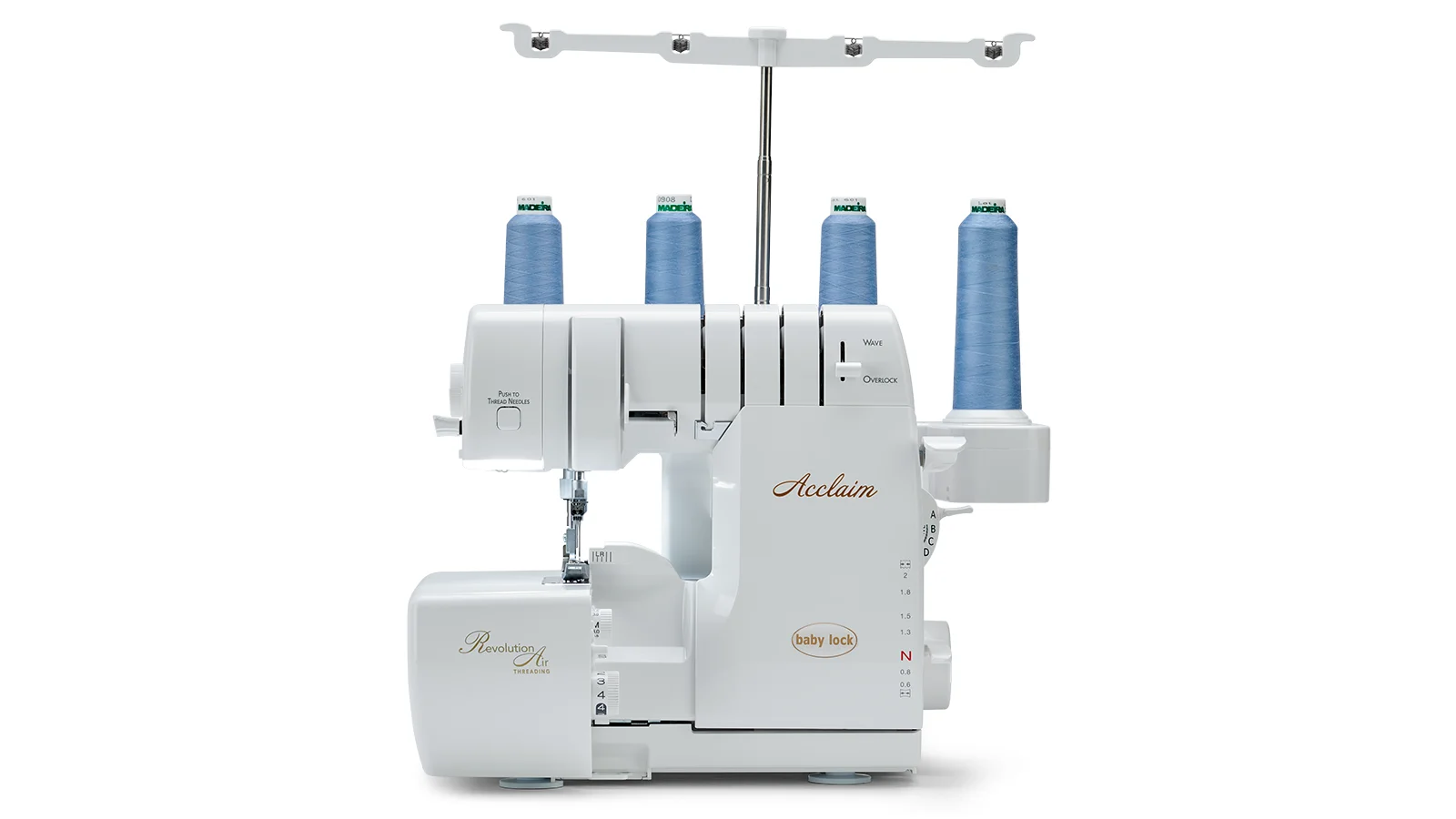
Why it's here Maximum threads: 4 · manufacturer's source
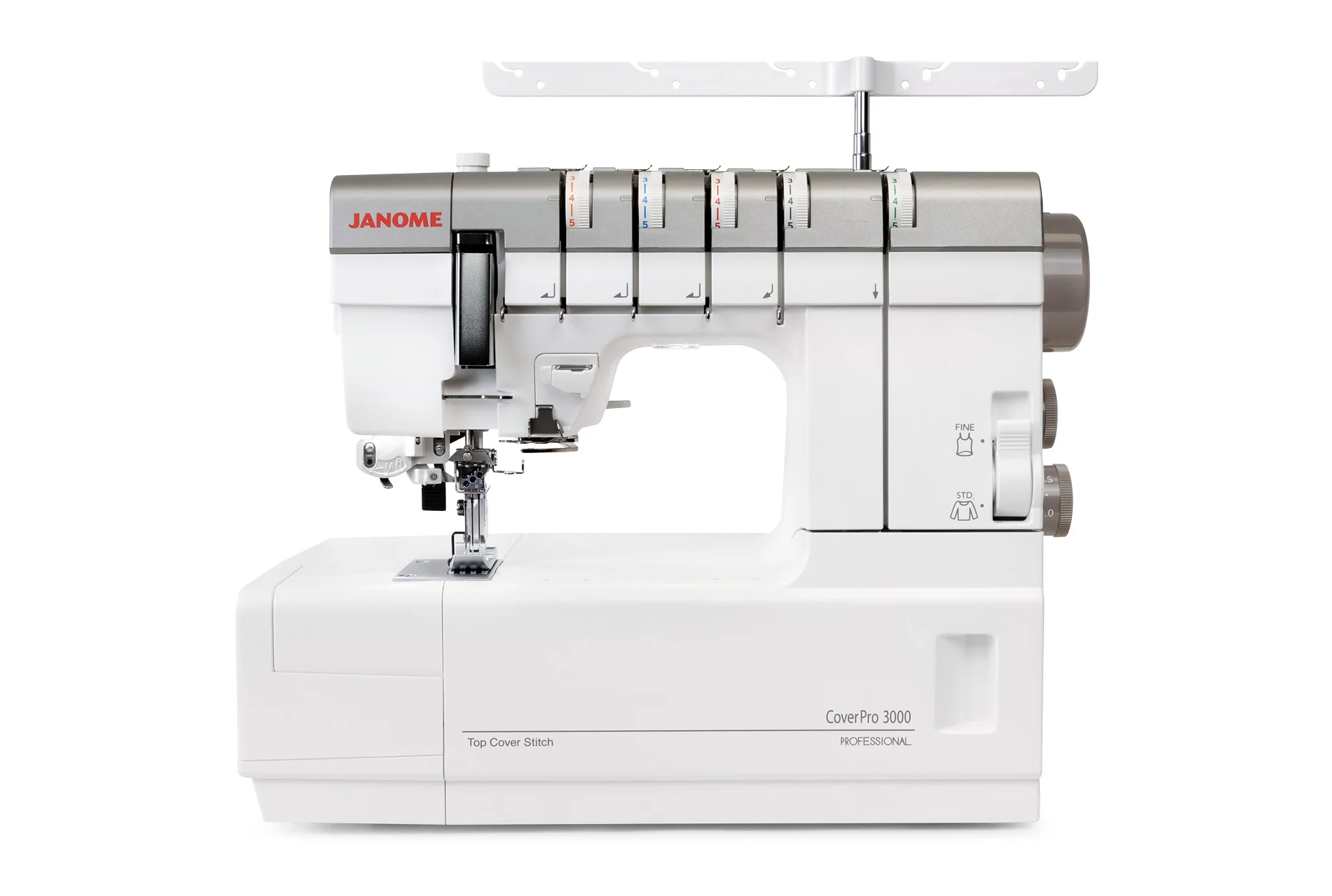
Why it's here Chain-off for coverstitch: Yes · manufacturer's source
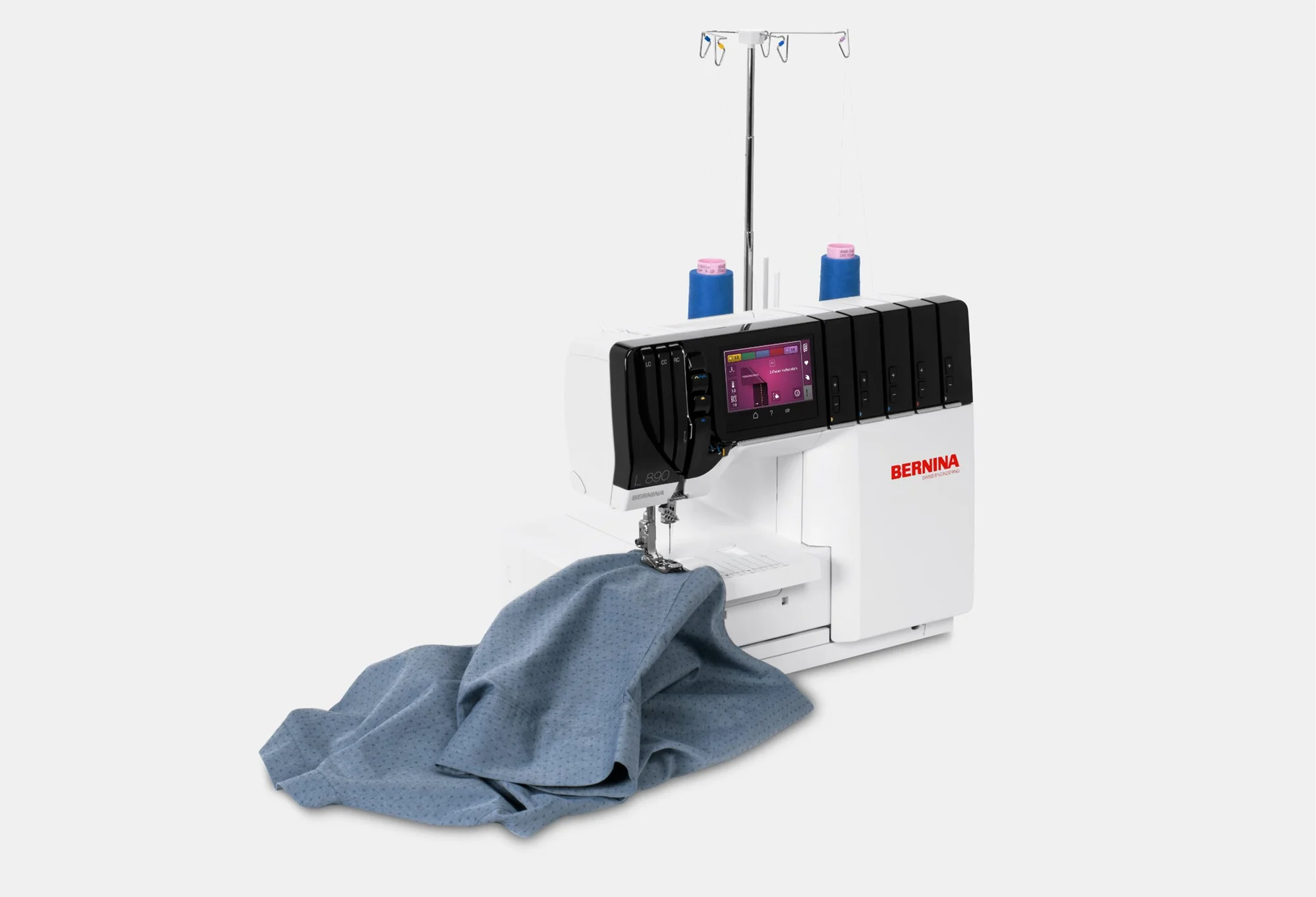
Why it's here Maximum threads: 5 · manufacturer's source