Sewing jersey on a sewing machine, without an overlocker
Jersey stretches, its edges curl, and with the wrong needle it skips stitches. With a ball-point needle, a stitch that stretches, and two adjustments, you can sew it on a sewing machine too.
You want to sew a t-shirt, a sweatshirt, a pair of leggings. The fabric is soft and stretchy, the cut edges curl, and on the first try the seam skips a few stitches or puckers. That's jersey, and beginners often assume they need an overlocker. Not so: jersey can be sewn on a sewing machine, as long as you change three things compared with cotton: the needle, the stitch, and the settings.
Why knit fabric is different
Jersey isn't a woven fabric, made of interlaced threads: it's a knit, made of loops of a single thread. That's where the two problems come from.
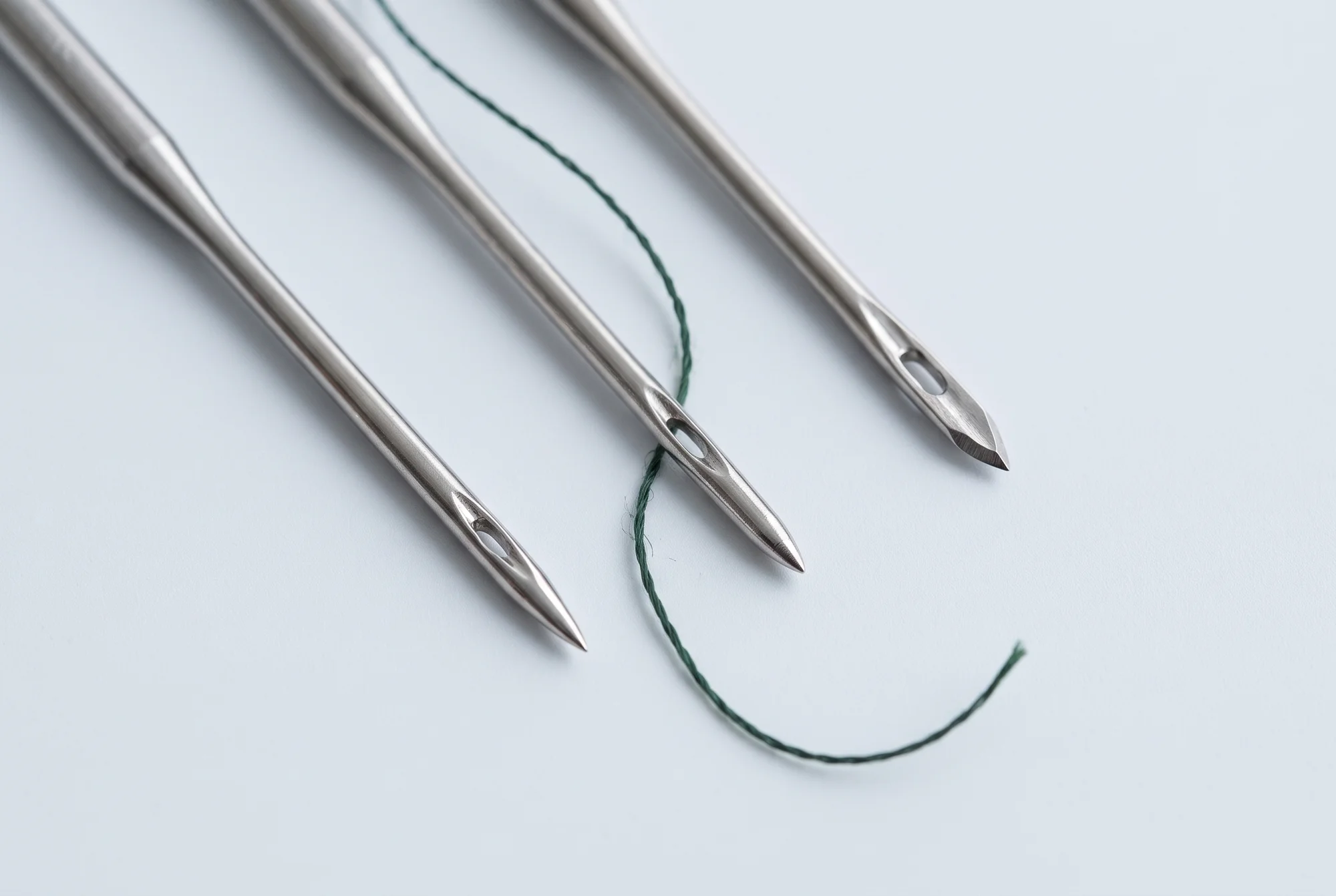
The first is the needle. If the point pierces the loops instead of pushing them aside, the knit is damaged and can run. Schmetz describes its medium ball point, the one on its needles for knits, like this: it pushes threads and loops aside and enters the gaps between them, without damaging the fabric.
The second is the seam, which has to be able to stretch along with the fabric. Every machine's straight stitch, the lockstitch, stretches very little, and Coats points to this as its limitation: where the fabric stretches, other stitches are needed.
The needle
For jersey, Schmetz recommends its Jersey needle, in sizes 70 and 80. For very stretchy knits, those with elastane, it recommends the Stretch, in sizes 65 and 75: it has the same ball point, but a shaft, eye and scarf (the notch above the eye, where the hook catches the thread) designed to avoid skipped stitches.
Brother's support site, on the other hand, recommends a 90/14 ball-point needle for stretch fabrics; Janome's manuals point to their own blue-tipped needle, size 11. The sizes don't match: start from the one in your machine's manual and check it on a scrap. The guide on the right needle for the fabric explains how to read the packet.
The thread
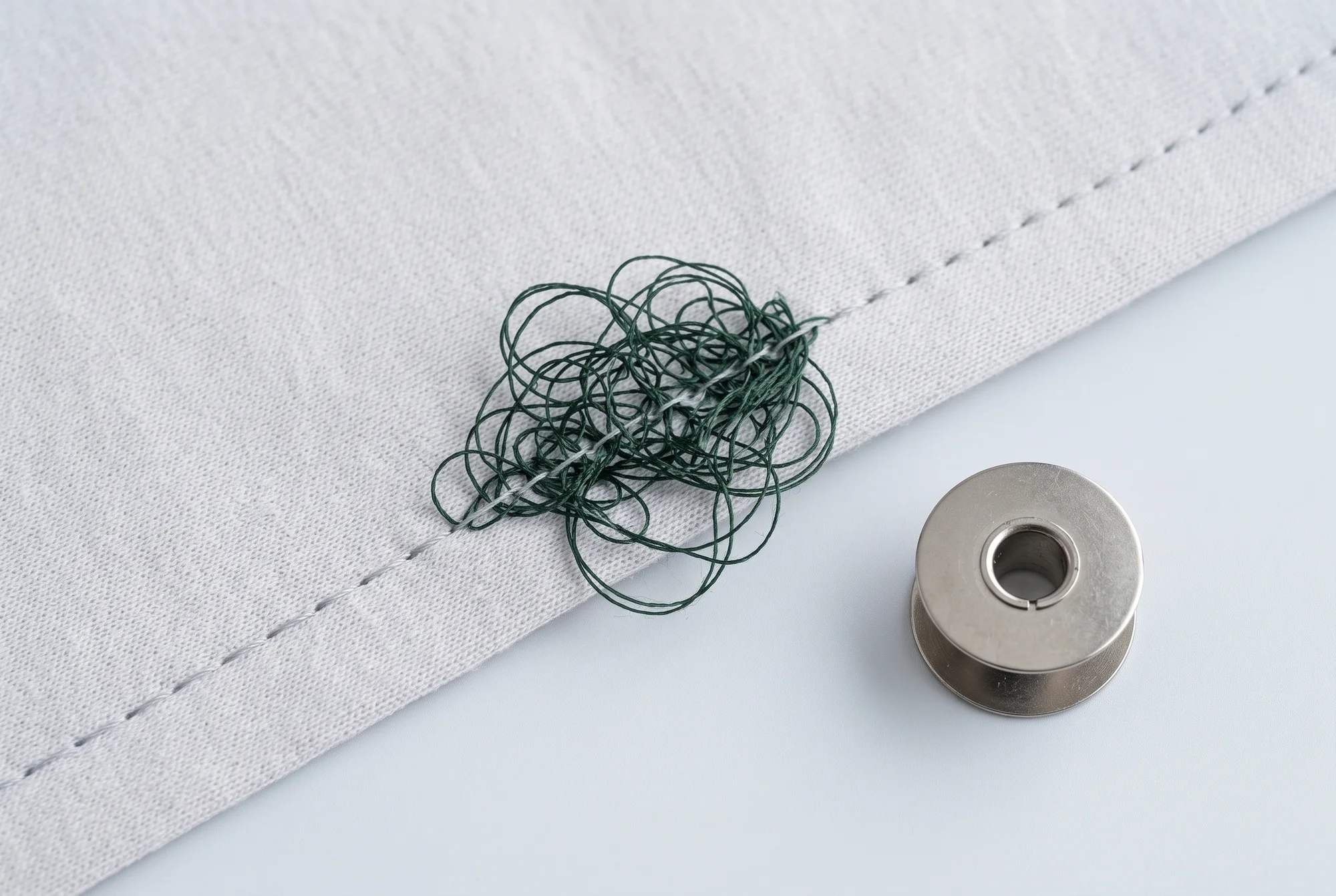
Brother, for stretch fabrics, recommends a knit thread or a stretch stitch. Janome recommends, as a general rule, the same thread in the needle and the bobbin, and that rule applies here too. Elastic thread is a different thing: it only goes in the bobbin, and it's for gathering fabric, not for joining two pieces of knit. Whatever thread you choose, it has to move freely through the needle's eye: if it frays or breaks, try a needle one size larger.
The stitch
Domestic sewing machines have several stitches that stretch. The main ones:
| Stitch | What it's for, according to manufacturers |
|---|---|
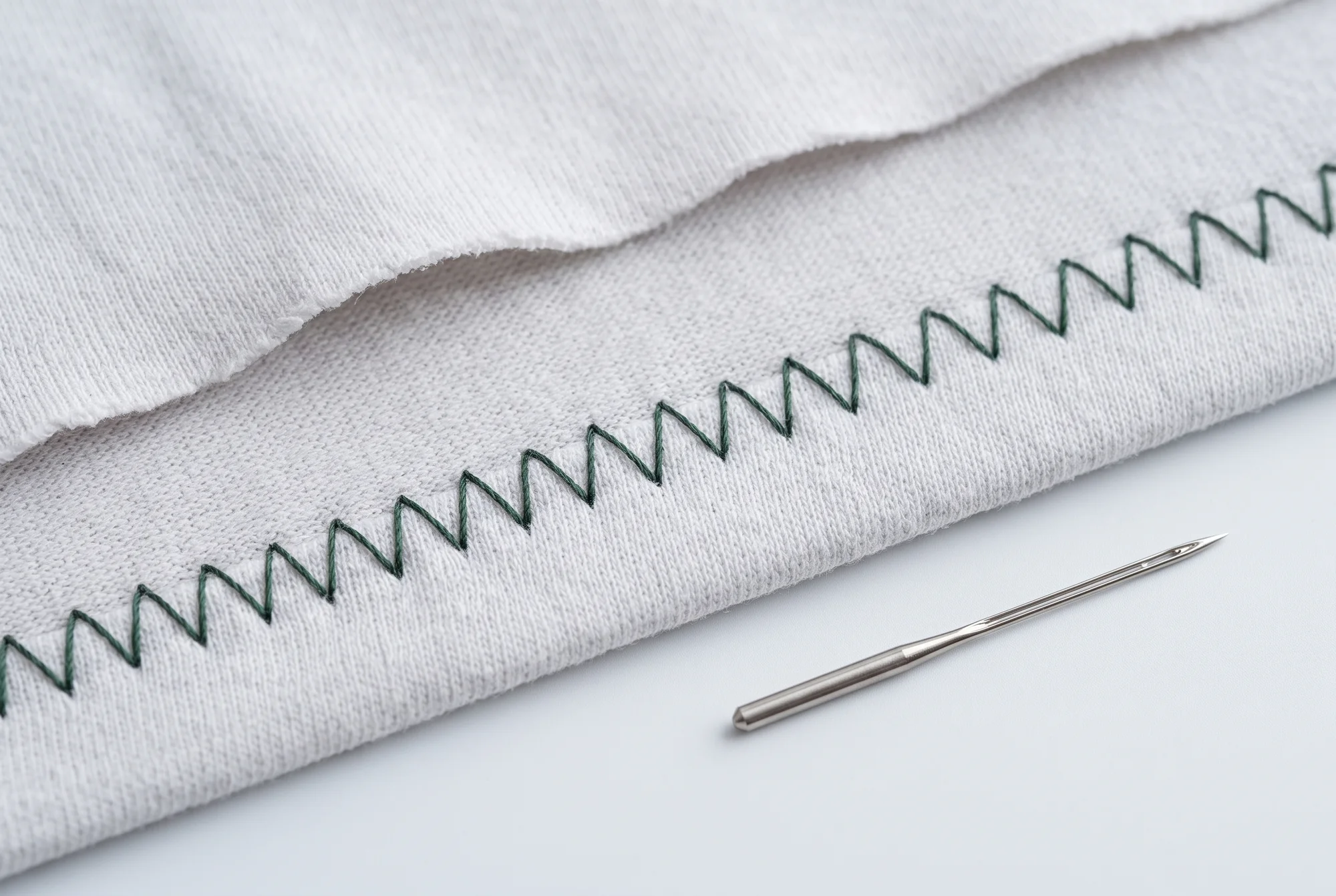
| Zigzag | Coats recommends it where the seam needs to stretch more than a straight stitch allows |
| Triple stretch straight stitch | Stitches over three times: Janome recommends it where you need both stretch and strength, like the crotch seam and armhole |
| Three-step zigzag | Lies flat: Brother also recommends it for attaching elastic |
| Stretch overlock stitch | Joins and finishes the edge in one pass; the extra allowance has to be trimmed separately |
Janome also has a narrow stretch straight stitch, which its manual describes as designed to avoid puckering knits, and a stitch that sews and finishes the edge with the overedge foot, for 0.6 cm seams on knits, for instance to attach ribbing.
Check which ones your machine has. In our catalogue, as of 19 September 2026, 45 of the 46 published sewing machines state their stitches: 42 have the zigzag, 36 the triple stretch straight stitch, 30 the three-step zigzag, and 21 the stretch overlock stitch.
Presser foot pressure and feed
Knit fabric stretches even as you sew it. The foot presses it against the feed dogs, the teeth under the plate that move it forward, and how hard it presses matters. Brother recommends reducing the presser foot pressure when the fabric stretches or when the layers don't feed together. Not every machine lets you adjust it: of the 25 sewing machines in our catalogue that state this, 21 do.
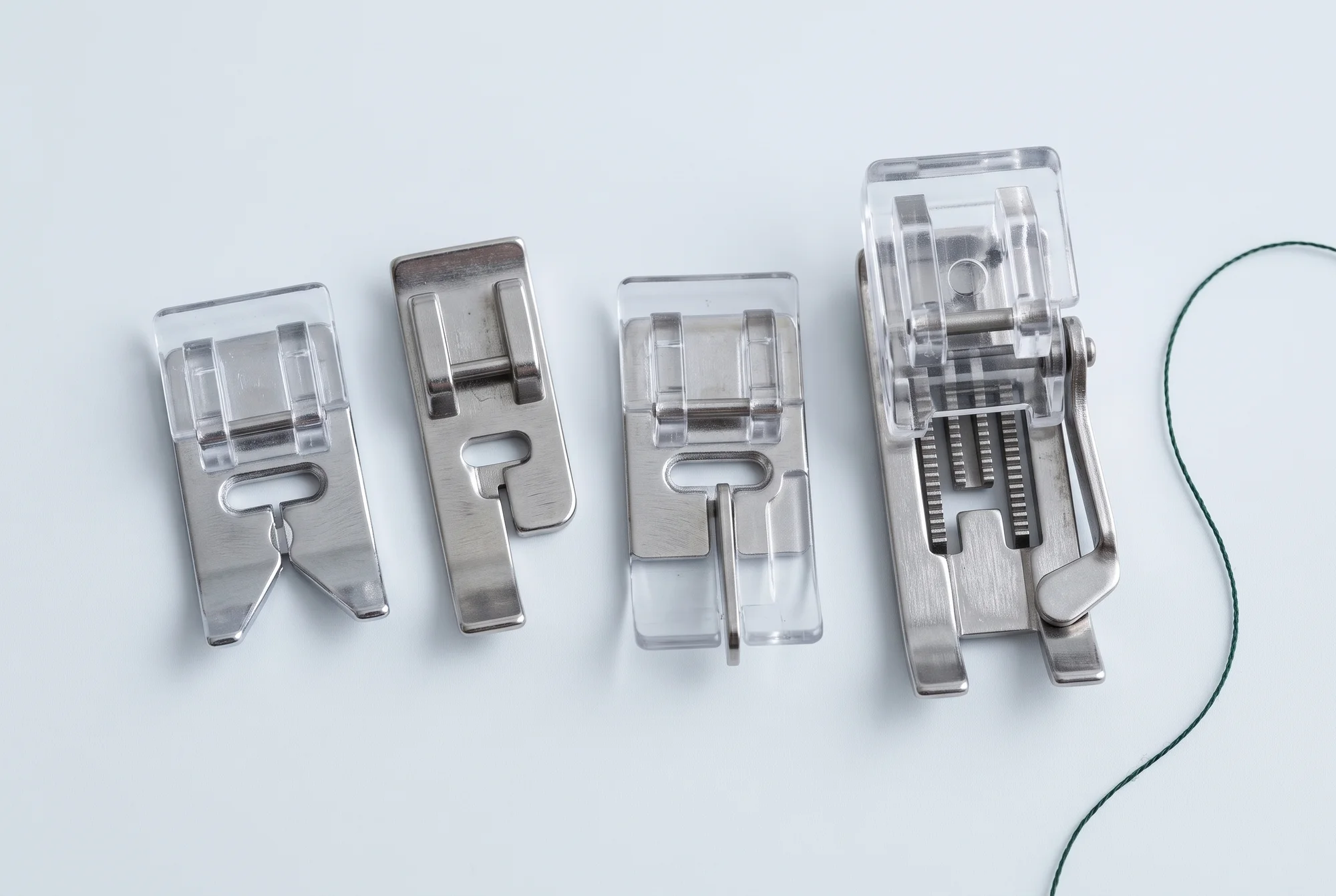
If the layers keep sliding against each other, you need dual feed: a second feed mechanism that pushes the fabric from above too. Janome's manual recommends the walking foot for knits as well, because it holds the fabric between the upper and lower feed. Some machines have it built in, others include it as a foot in the box: in our catalogue it's six and six. The guide on fabric feed explains the difference.
The hem
For t-shirt hems, Schmetz recommends the Stretch twin needle, two needles on a single shaft, spaced 2.5 or 4 mm apart: it sews two parallel rows on the right side. Schmetz warns that twin needles only fit zigzag machines: check the manual to see if yours accepts one. The alternative is the stretch blind hem stitch, which on machines that have it is designed for fabrics that stretch.
What about the overlocker?
An overlocker has a knife that trims the seam allowance as it sews and finishes the edge: that's what a sewing machine lacks, even when it makes the stretch overlock stitch. As you've seen, it isn't essential for sewing jersey. If you're wondering whether to buy one, read do you need an overlocker?.
In brief
A ball-point needle, a stitch that stretches, lighter presser foot pressure, and fabric guided along without pulling it. The steps below are in order: do them on a scrap of the same jersey before sewing the garment.
Sources
- Schmetz, Needle ABC. Needles for household sewing machines, edition 03/2024 — Source 1
- Schmetz, «Point shapes» — Source 2
- Brother, «For better results when sewing stretch fabrics» — Source 3
- Brother USA, «Adjusting the presser foot pressure» — Source 4
- Brother USA, «Needle type for stretch fabrics» — Source 5
- Janome, instruction manual DC5100 — Source 6
Step by step
-
Fit a ball-point needle
A Jersey needle for ordinary jersey, a Stretch one for knits with elastane, in the size your machine's manual indicates. The ball point pushes the knit's loops aside instead of piercing them.
-
Choose a stitch that stretches
A zigzag, the triple stretch straight stitch, or the stretch overlock stitch, if your machine has it. A regular straight stitch stretches very little.
-
Test on a scrap
Sew two layers of the same jersey, with the needle and stitch you've chosen, and check the result before moving on to the garment: Schmetz and Janome always recommend this test. If it skips stitches, check the needle first.
-
Lighten the presser foot pressure
If the machine allows it, reduce the presser foot pressure until the seam lies flat. Brother recommends lowering it when the fabric stretches or the layers don't feed together.
-
Baste, and don't pull the fabric
Join the pieces with basting stitches or pins, then sew letting the machine feed the knit on its own: guide it with your hands without pulling or holding it back.
-
If the layers slip, use dual feed
Engage the built-in dual feed or fit the walking foot: it pushes the fabric from above too, so the two layers feed together.
-
If thin knit puckers, put paper underneath
Brother suggests a sheet of thin paper or a stabiliser under the fabric, sewn in and torn away afterwards. For buttonholes on stretch fabrics, Janome recommends a piece of interfacing on the wrong side.
-
Hem with a twin needle
For t-shirt hems, fit a Stretch twin needle, if your machine does zigzag and accepts one: it's the needle Schmetz recommends for t-shirt hems and edges, with the needles spaced 2.5 or 4 mm apart.
Three examples from the catalogue
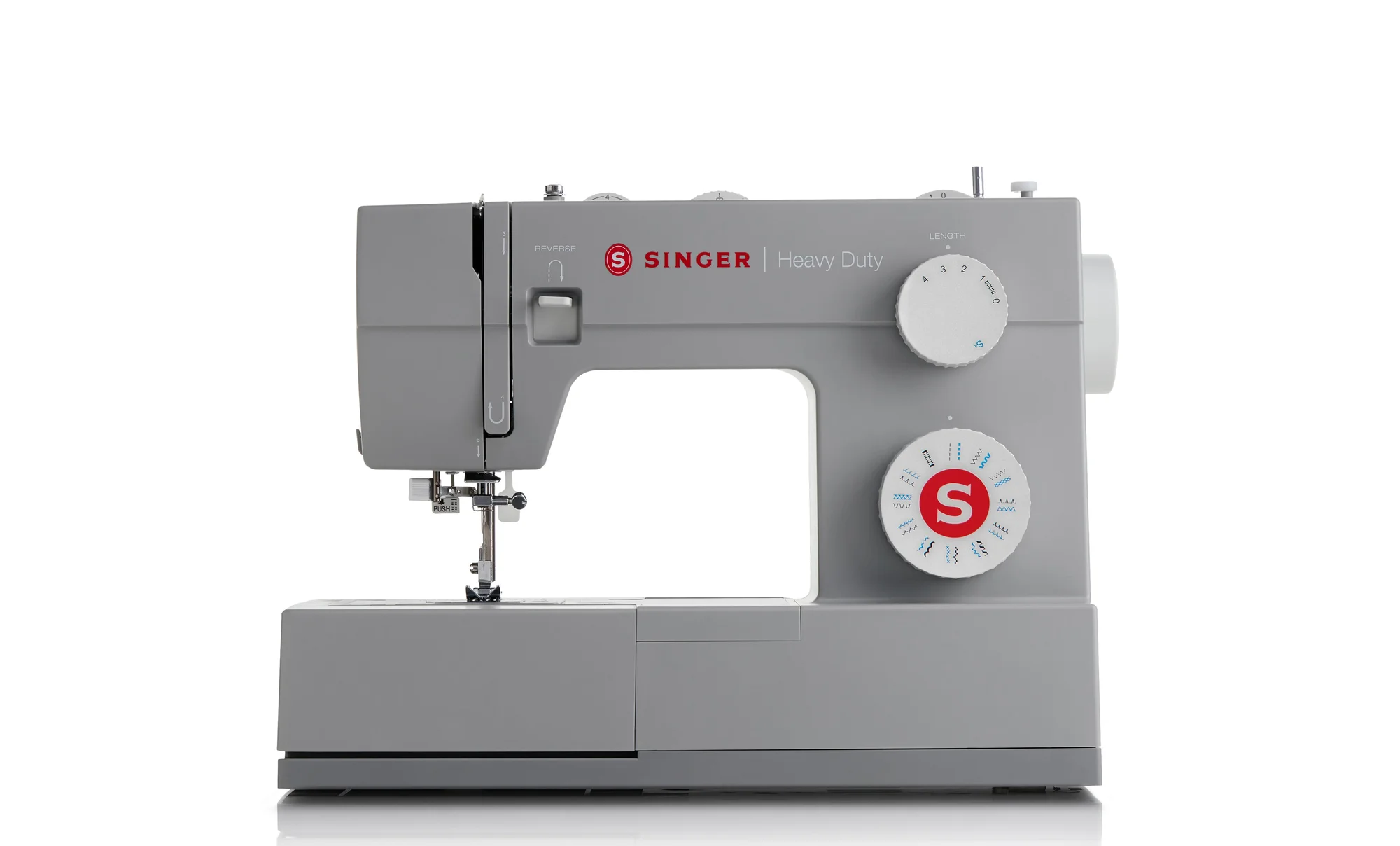
Why it's here Adjustable presser foot pressure: Yes · manufacturer's source
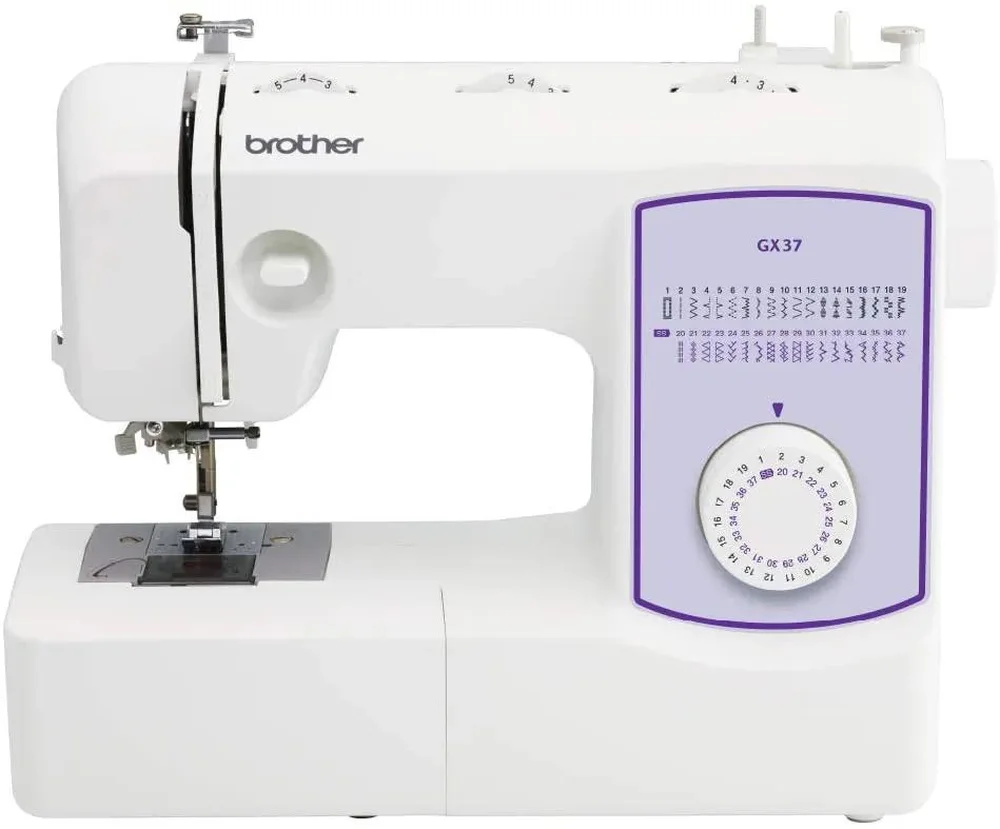
Why it's here Stitch types: Elastic overlock stitch · manufacturer's source
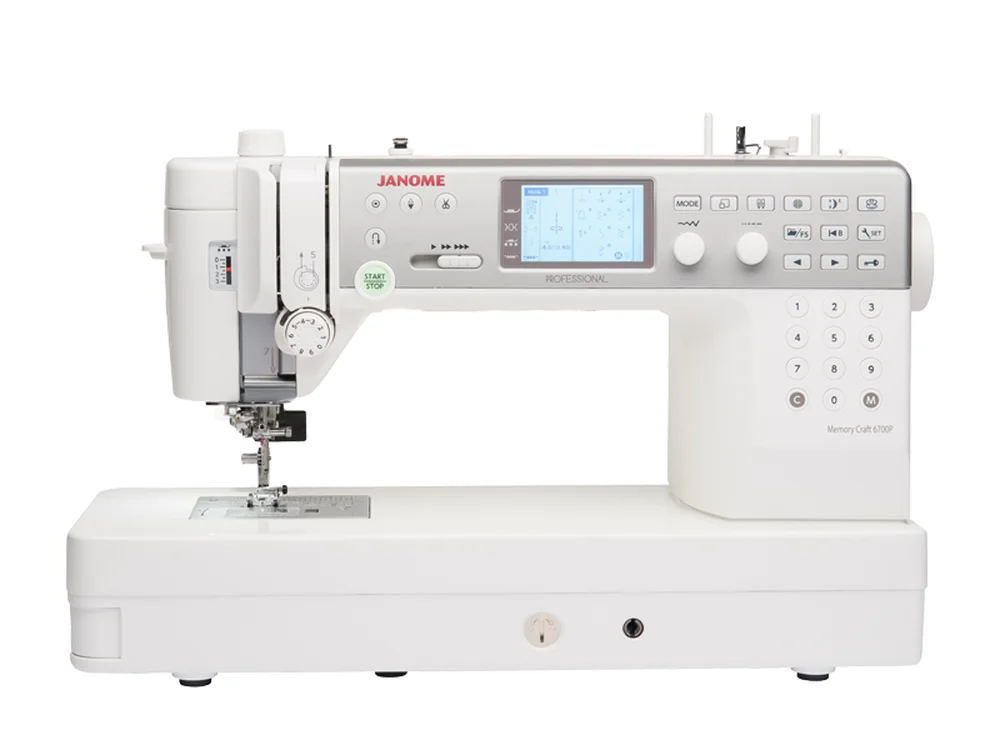
Why it's here Dual feed / walking foot system: Walking foot included · manufacturer's source