The presser feet you actually need, and which ones come in the box
Zipper, buttonhole, blind hem, dual feed: what each foot is for, which ones are usually in the machine's box, and how to tell whether a foot bought separately will fit yours.
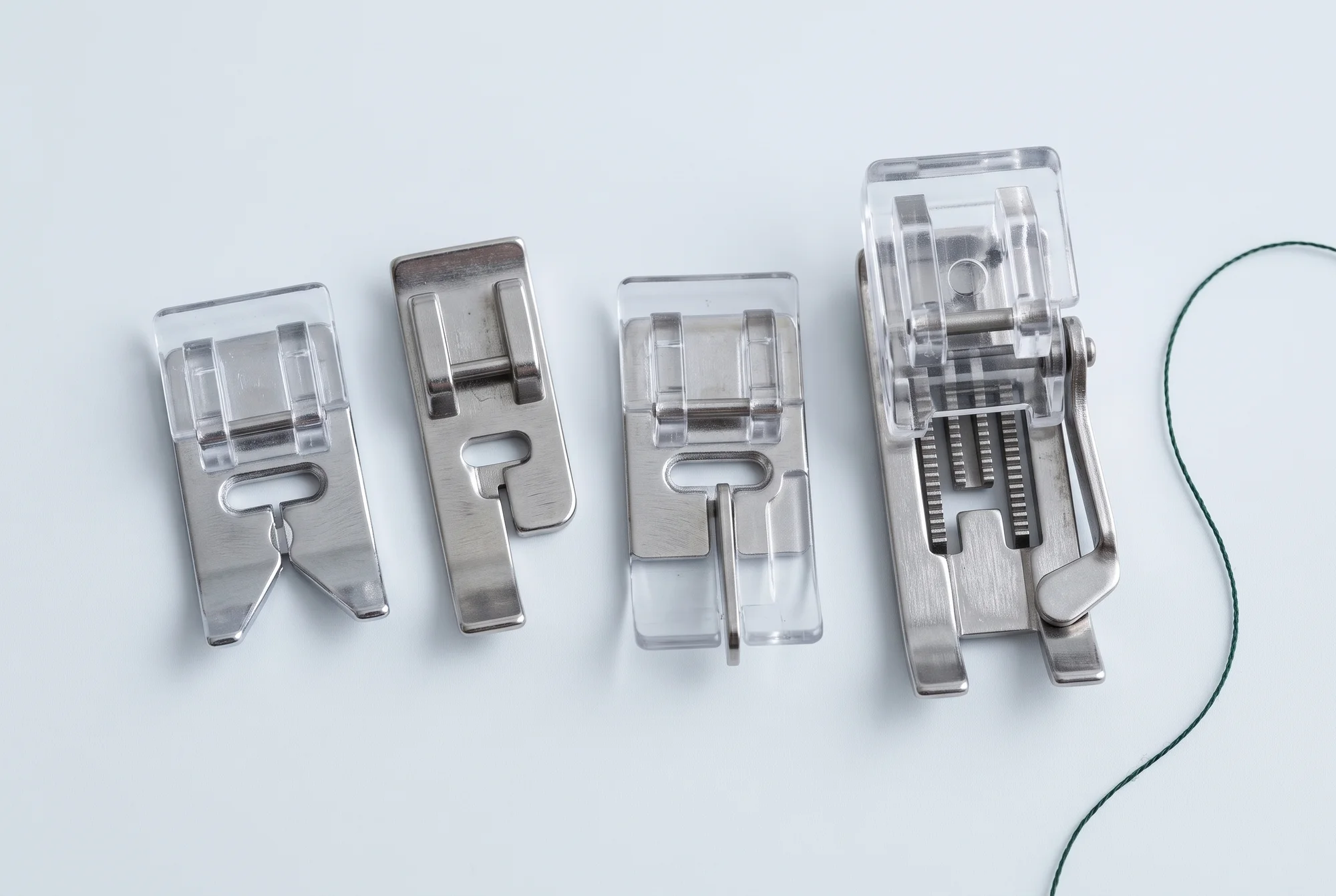
You open the machine's box and find a bag of metal and plastic pieces that all look alike. These are the presser feet: the part that presses the fabric against the plate while the needle sews. Each one is shaped for a particular job, and with the right one a hard job becomes simple. This guide explains what the most common ones are for, which ones you'll usually find in the box, and which are worth buying separately, depending on what you want to sew.
What's in the box
It depends on the machine, and the differences are big. The manual for an entry-level Janome mechanical machine lists, besides the foot fitted on the machine, a buttonhole foot, a zipper foot and a hemmer. The manual for a more fully featured Janome electronic machine lists ten: for straight stitch, zigzag, satin stitch, zipper, automatic buttonhole, overedge, blind hem, darning, quarter-inch seam, and dual feed.
In our catalogue, as of 19 September 2026, only 9 of the 46 published sewing machines state how many feet come in the box: it ranges from 2 to 10. This is a figure manufacturers publish rarely, and it's worth looking for in the spec sheet or manual before buying.
The standard foot
This is the one fitted on the machine, and it's enough for many jobs: Janome calls it the zigzag foot, and its manual recommends it for straight stitch, zigzag and most stretch stitches. Some machines also have a foot for straight stitch alone. Janome warns that with this foot the needle has to stay in the centre position, otherwise it hits the foot and can break.
Zipper
The zipper foot is narrow, letting you sew right up against the zip's teeth, where the standard foot can't reach. It fits on the right or the left, depending on which side you're sewing: Janome and Pfaff both describe it this way.
The invisible zipper, the kind that disappears into the seam once closed, has a foot of its own. Husqvarna Viking describes it as having two grooves underneath that hold the zip's coils as you sew; a regular zipper foot, it explains, can't get close enough to the coils.
Buttonhole
The automatic buttonhole foot has a slot at the back where you place the button: the machine works out the buttonhole's length from that. On the model described in Janome's manual, the button can be up to 2.5 cm across. On stretch fabrics Janome recommends placing interfacing underneath, and Pfaff suggests a stabiliser for fabrics that shift or stretch. The stitch the foot produces is described in the entry on buttonholes.
Blind hem
The blind hem foot is for hems on trousers and skirts that are almost invisible from the right side. Janome describes it as having a metal guide in the centre and three grooves underneath: the folded edge of the fabric runs against the guide, and the grooves keep it from slipping. A screw on the foot moves the guide: it has to be set so that the needle, at its leftmost point, just catches the edge of the fold. If it catches too much, the stitches show on the right side. The stitch it uses is the blind hem stitch.
Overedge
The overedge foot (Janome calls it just that) is for finishing a cut edge with a zigzag or an overlock stitch on the sewing machine. It has a small ledge the edge runs against and guide wires the stitch passes over: according to Janome, these keep the edge tidy and the fabric straight. Janome warns to keep the stitch width between 5 and 7, otherwise the needle hits the foot. It doesn't trim the seam allowance the way an overlocker does: the difference is explained in do you need an overlocker?.
Satin stitch
The satin stitch foot, as Janome calls it, is the one its manual recommends for decorative stitches and satin stitches. With the feed dogs dropped, the same foot is also used for sewing on buttons: the button's holes line up with a slot in the foot, which holds the button in place once lowered.
Quarter inch
In patchwork the standard seam allowance is a quarter inch, about 0.6 cm: Janome calls it the "essential" allowance for patchworkers. The quarter-inch foot has a guide that keeps the fabric's edge at that distance from the needle. Janome also recommends it where the markings on the plate can't be used.
Darning
The darning foot is used with the feed dogs dropped, meaning the teeth that move the fabric forward stay still under the plate: the fabric doesn't advance on its own, you move it yourself. In the Janome manual we read, it's used for long-stitch basting: the machine makes one stitch and stops, and you move the fabric to where you want the next one.
Dual feed
Usually fabric feeds forward thanks to the feed dogs, which push it from below; the top layer follows as best it can. With slippery fabrics, knits, or several layers, the layers feed at different speeds and the seam puckers. The walking foot has teeth of its own, which push the fabric from above too. Janome recommends it for lightweight fabrics, knits, leather and faux leather, because it holds the fabric between the upper and lower feed; with a guide bar it also helps with quilting parallel rows.
Some machines have dual feed built in, with no dedicated foot: Pfaff calls it IDT, Integrated Dual feed technology. On these you need feet compatible with the system, and Pfaff states this for every foot. The guide on fabric feed explains the differences.
Will the foot fit your machine?
A foot bought separately doesn't fit every machine. What matters is the attachment: how the foot clips onto the bar, with a quick snap-on fitting or a screw, and at what height. What matters is the maximum stitch width: Pfaff also divides its machines by this (5, 5.5, 6, 7 or 9 mm) and by whether built-in dual feed is present, assigning each group a letter. Every foot in its catalogue states which machine letters it fits. Other brands have their own systems. The guide on shank and presser foot attachment explains how to recognise yours.
How to decide
- For hems, repairs and first garments, the ones in the box are usually enough: standard, zipper, buttonhole, blind hem.
- If you sew clothes with invisible zips, add the dedicated foot.
- If you sew jersey, fleece or several layers, or want to quilt, dual feed makes the difference: built in or as a foot.
- If you do patchwork, the quarter-inch foot.
- Before buying one, check your machine's attachment and stitch width.
Sources
Three examples from the catalogue
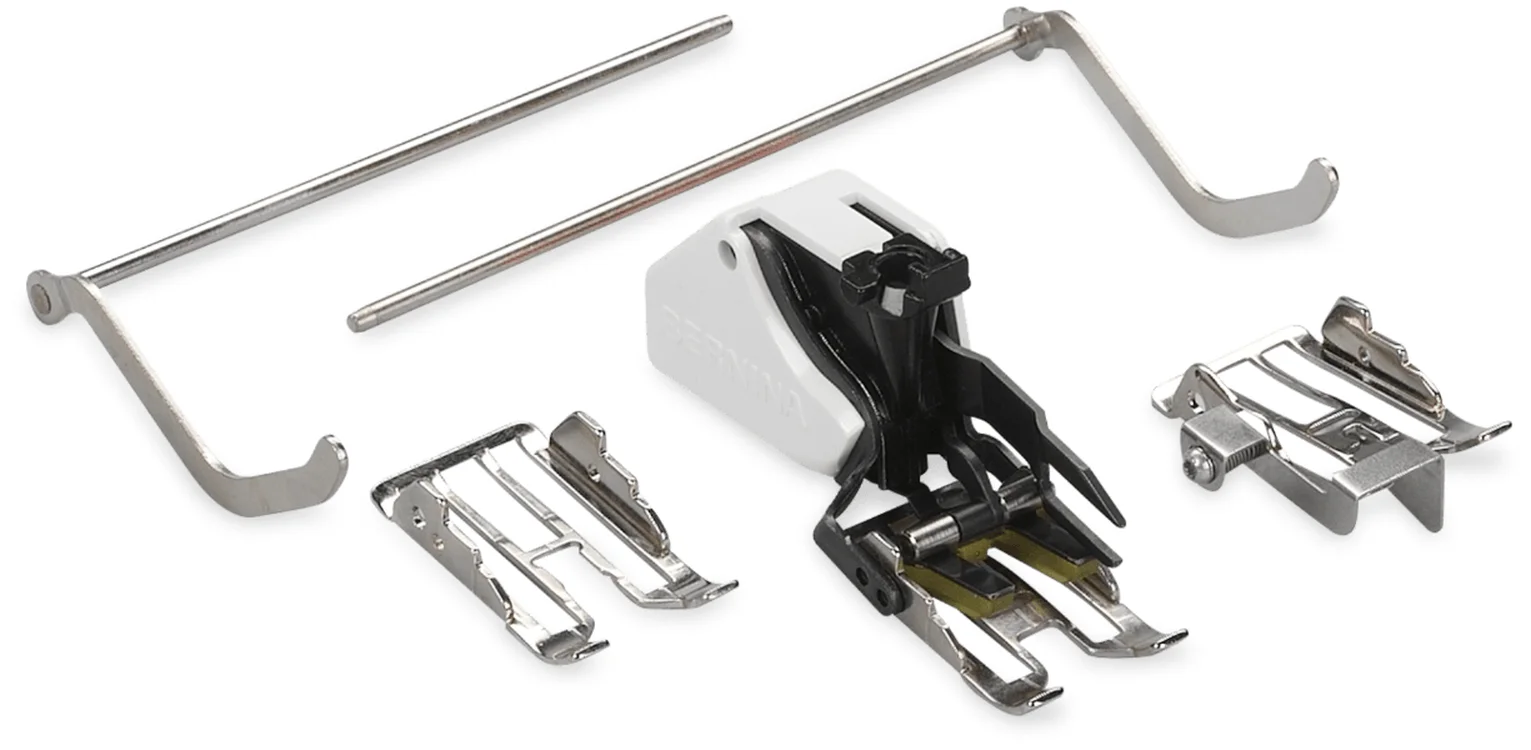
Why it's here Foot function: Walking foot · manufacturer's source
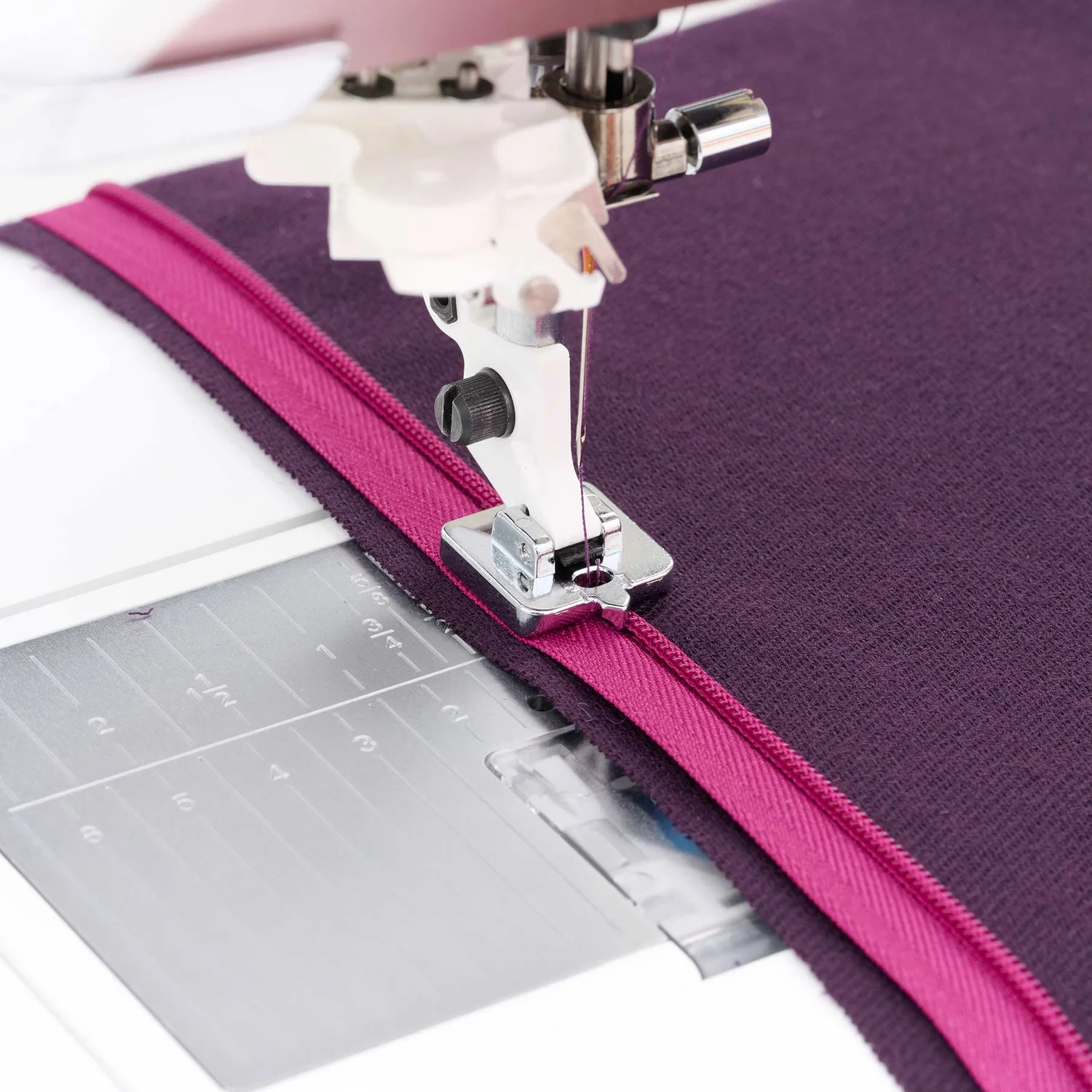
Why it's here Foot function: Zipper foot · manufacturer's source
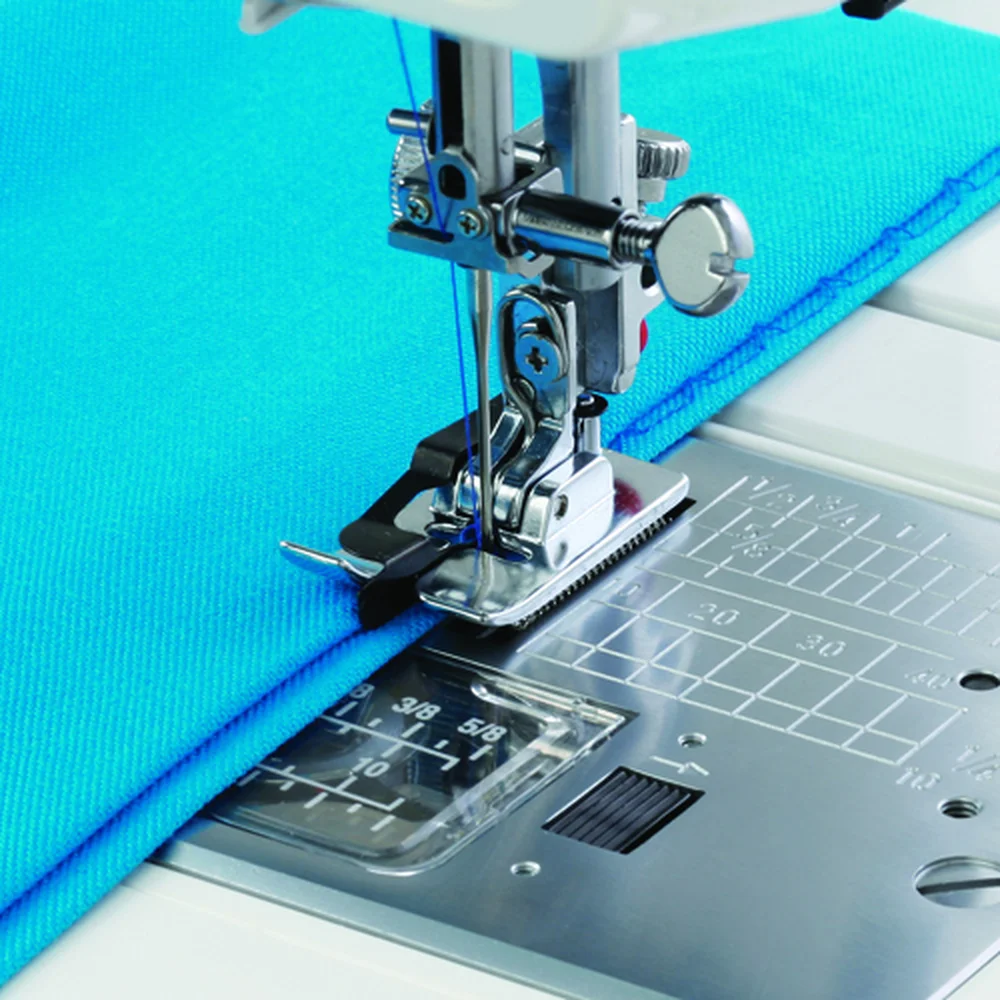
Why it's here Foot function: Blind hem foot · manufacturer's source