Sewing heavy fabrics: which machine and which needle
Denim, canvas and multiple layers ask more of feed, presser foot pressure and clearance under the foot than of raw power. Here is what to look for in our model pages and where a home machine runs out.
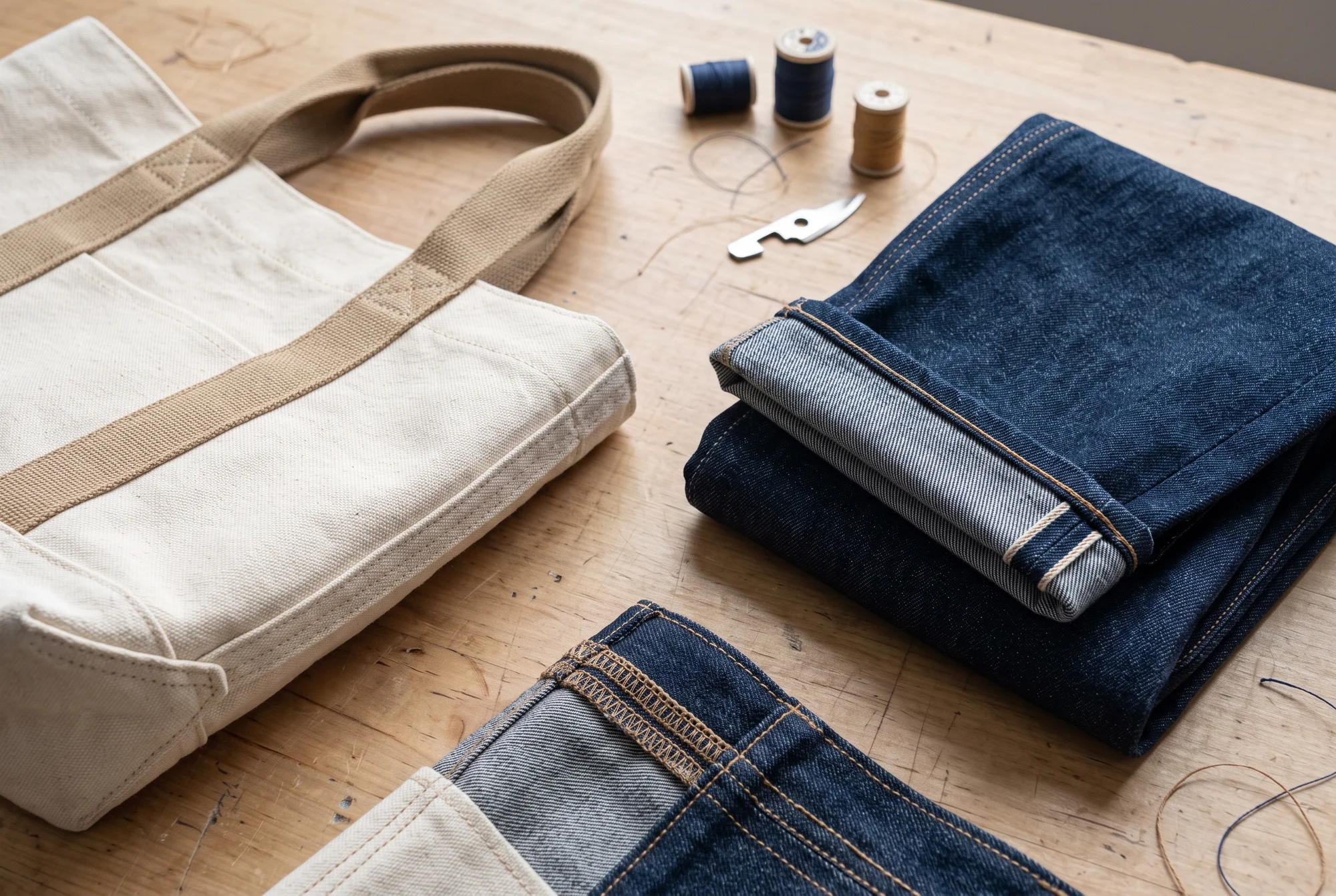
A machine does not get through heavy fabric because of the watts printed on the box. It does so when the fabric feeds evenly, when the presser foot lifts high enough to let the layers in and presses on them with the right force, and when the thread and needle are the right size. Before looking at models, it helps to understand these four points.
What you really need
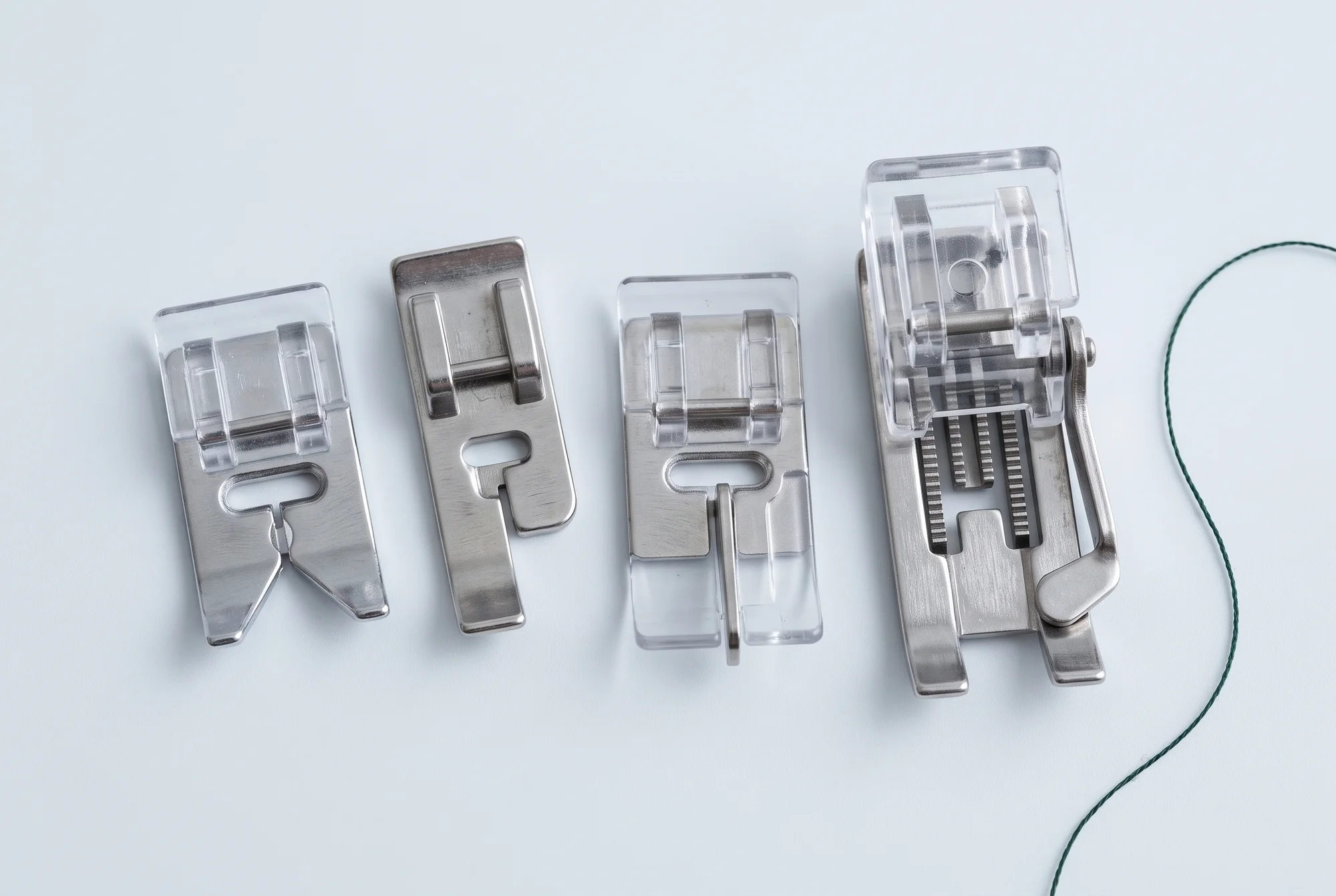
Feed. On thick layers the problem is that the top layer slips while the bottom one moves forward: you get puckers and uneven stitches. A machine with good feed, or with a walking foot, holds the layers together. To see how it works, read our guide on fabric feed.
Presser foot pressure. It must be adjustable. On the Janome HD718 the model page describes pressure adjustable across every fabric, from the thinnest to the stiffest; on the Janome HD9 Professional the graduated dial goes up to 11 lbs.
Presser foot lift. This is the room under the foot: if the foot does not rise, the fabric does not fit. The HD9 Professional declares an extra-high lift, and its knee lift keeps your hands free to arrange the layers.
Build and speed. A rigid frame and a motor that holds speed under load matter more than the stated power: the Singer 4432 has a metal interior frame, the HD9 Professional a cast aluminum structure.
Needle and thread
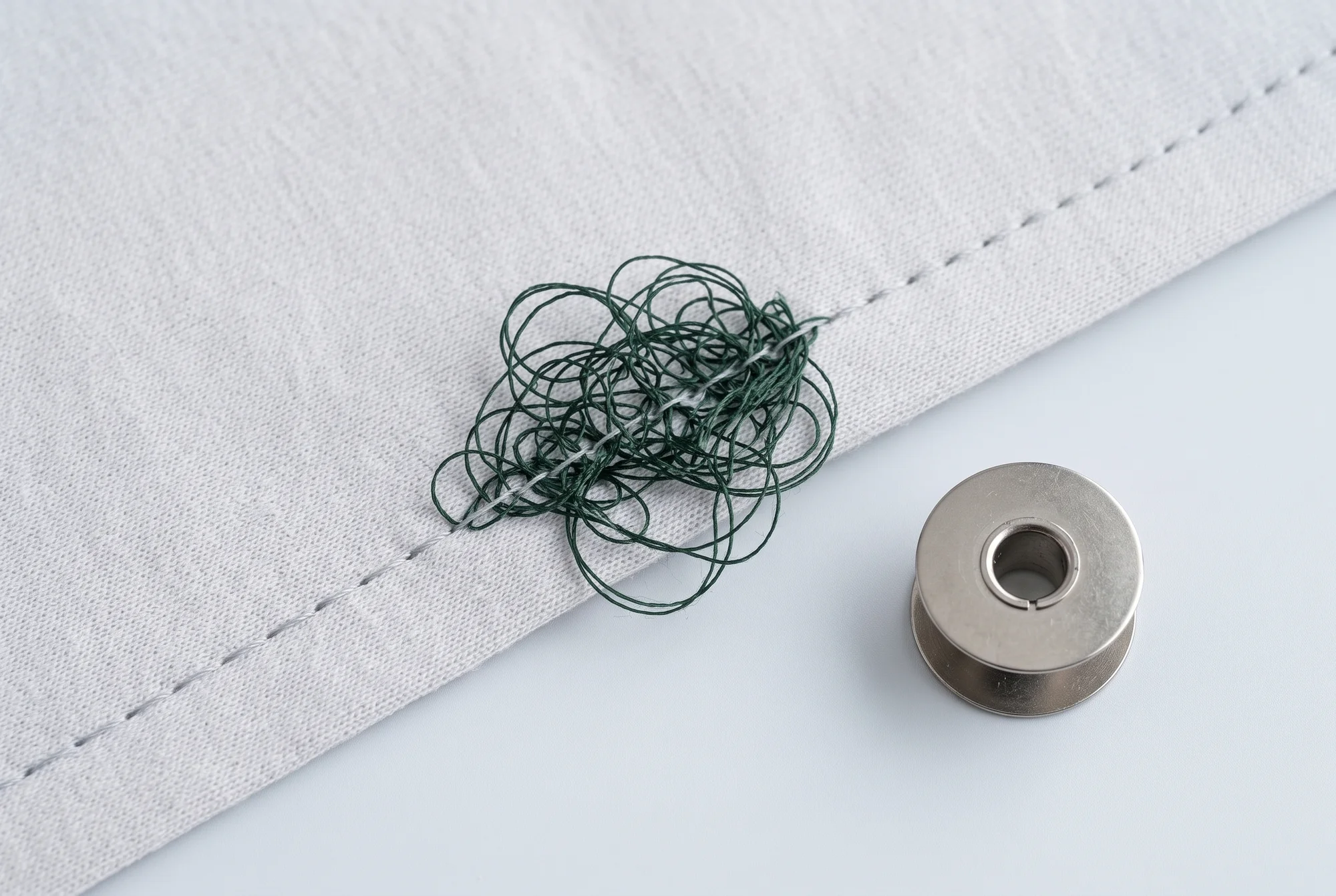
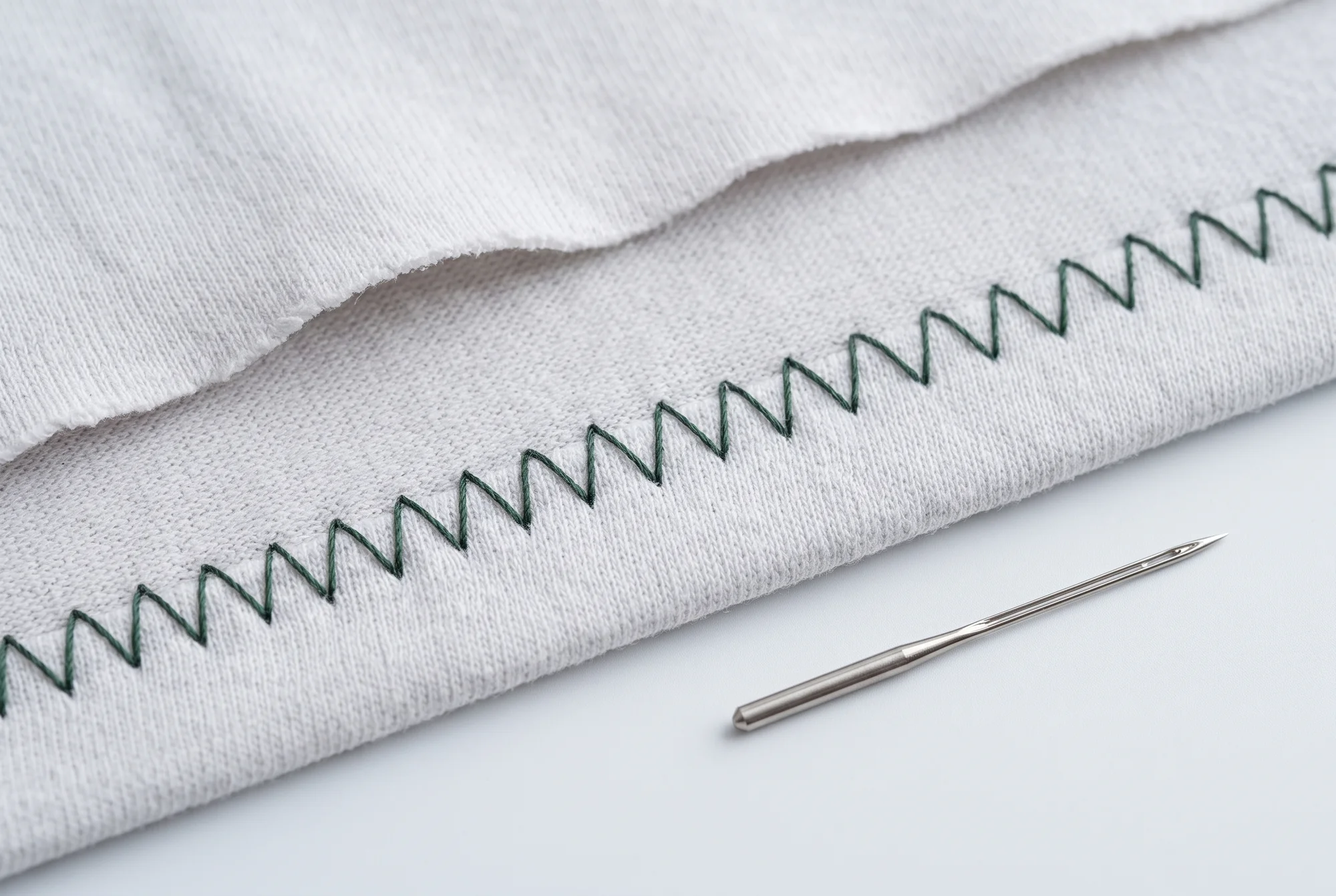
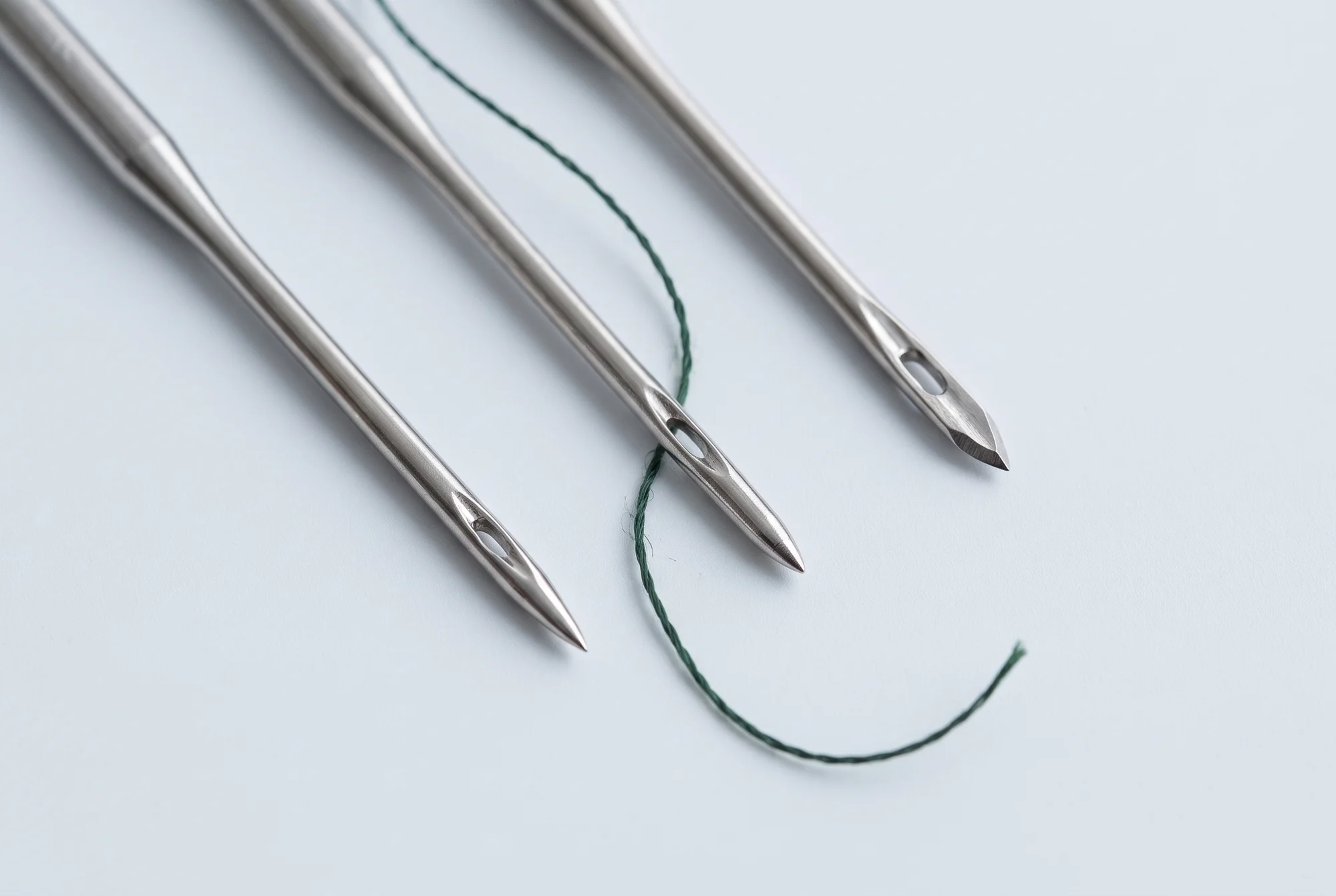
Denim and canvas call for a thicker, sturdier needle than a shirt does, and suitable thread. Change the needle often: a blunt needle through eight layers of denim skips stitches. If you are unsure, our guide on the right needle for the fabric explains system, size and point. On thread, the extreme example is the Sailrite Ultrafeed LS-1, which sews thread from Tex 30 to Tex 92, the heavy-duty range for boat canvas and sails, not dressmaking cotton. On the Juki TL-2200QVP Mini the model page lists two needle systems, 130/705H and HLx5: the industrial one opens the door to sturdier needles.
Mechanical machines: where to start
In the mechanical machines category we have 16 model pages. For heavy fabrics three are the most interesting.
The Janome HD718 is a Heavy Duty mechanical with a 5-piece feed and a horizontal full-rotary hook loaded from above, the simplest system to adjust and thread. It has 18 dial-selected stitches, a free arm for cuffs and trouser legs, 7 feet, and weighs 8.5 kg. It is the choice for someone who wants a solid base for denim without moving to a computerized machine. It has no decorative stitches and no memory.
The Singer Heavy Duty 4432 has 32 dial-selected stitches, a metal interior frame, a stainless steel bed plate and presser foot pressure adjustable to follow both lightweight fabrics and thick layers of denim or canvas; the motor holds speed up to 1100 stitches per minute. It has only 3 needle positions, so little margin for precision stitching near an edge. Its sibling, the Singer Heavy Duty 4423, is the entry model of the same line, with fewer stitches.
If you hesitate between the first two, the comparison Janome HD718 versus Singer 4432 lines up the differences. My reading: the HD718 for those who want the feed and simplicity, the Singer for those who want more stitches and a metal frame.
The semi-professional straight stitch
If your projects are curtains, bags, backpacks, work trousers and almost always straight seams, a straight-stitch-only machine does more than a general-purpose domestic one.
The Janome HD9 Professional is built for quilting and heavy fabrics: cast aluminum frame with eight ball bearings, a vertical full-rotary industrial-type hook, up to 1,600 stitches per minute, stitch length up to 6 mm, automatic thread cutter. It weighs 14.5 kg. It has no zigzag or buttonholes, and tension is manual only.
The Juki TL-2200QVP Mini reaches 1,500 stitches per minute, adjustable down to 200, useful for slowing down on heavy materials, with an automatic thread trimmer and stitch length up to 6 mm. It weighs 11.5 kg and the knee lifter is optional. The comparison of the two is already online. Among the semi-professionals there is also the Janome 1600P-QC, at 14.1 kg.
If you wonder whether to step up to an industrial machine, it only makes sense with continuous work and a fixed place to keep it.
Where the limits are
A home machine, even a Heavy Duty one, is built for denim and canvas with a few layers. For marine or upholstery work look at the Sailrite Ultrafeed LS-1: walking foot, 34 mm needle bar stroke, straight stitch only. Its top speed is 550 stitches per minute and lubrication is manual: it is for occasional heavy work, not production.
How to choose
- Trousers, jeans hems, canvas bags, curtains: HD718 or Singer 4432.
- Lots of straight stitching, quilting and substantial layers: HD9 Professional or Juki TL-2200QVP Mini, knowing they have no zigzag or buttonholes.
- Coated canvas, sails, convertible tops: Sailrite Ultrafeed LS-1.
There are no hands-on tests of ours behind this guide: the data comes from the manufacturers' specifications that you find on the model pages.