Mechanical, electronic or computerised sewing machine: what really changes
What changes is how you select and adjust the stitch, and how much the machine does on its own. What doesn't change is how the stitch itself forms. And the guides disagree on which is best to start with.
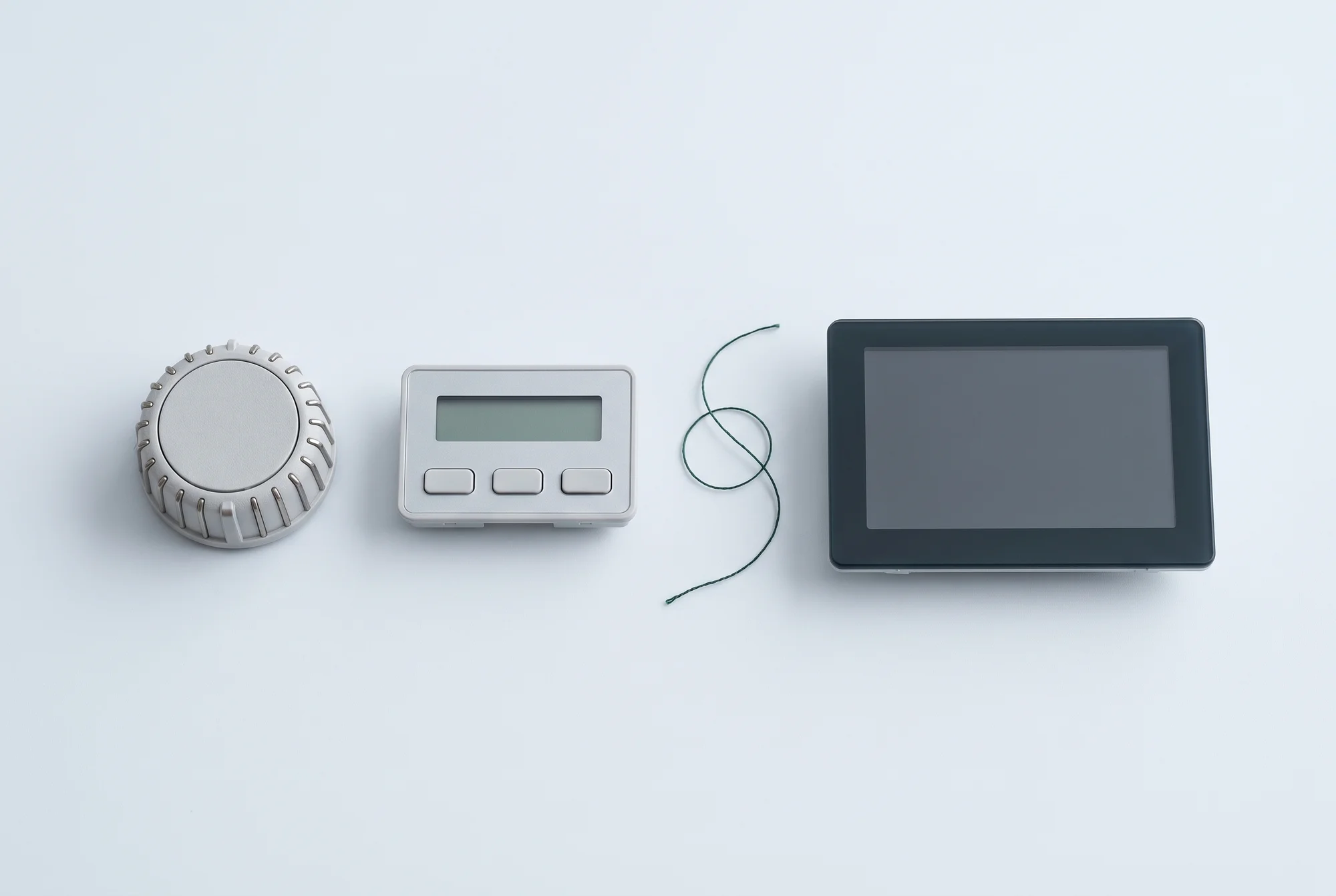
In shops and on spec sheets you'll find three words: mechanical, electronic, computerised. They look like three rungs of a ladder, and you start wondering if you need to climb to the top to sew well. It isn't so: the difference is about how you control the machine and how much work it does for you, not the quality of the stitching.
What sets them apart: how you select the stitch
The difference manufacturers state in black and white is how you select the stitch:
- by dial: you turn a wheel and pick the stitch; width and length are set with other dials. Janome puts it this way on its spec sheets: "Stitch Selection Type: Dials";
- by buttons, with a small display showing the stitch number and settings;
- by touchscreen, a colour screen where you pick the stitch and see the settings.
Brother uses a dedicated field on its spec sheets, with values matching these three cases: "Stitch Dial," "Mode & Shift Key," "Touch Screen."
As of 19 September 2026, of the 46 sewing machines in the SewingSpecs catalogue, 32 have a source for this figure: 17 are set by dial, 7 by buttons, 8 by touchscreen.
"Electronic" doesn't mean the same thing to everyone
Here the words get muddled. Singer splits its machines into just two families: mechanical ("Mechanical Machines") and computerised ("Computerized Machines"). Bernina, on the other hand, in its official model comparison, calls even its touchscreen machines "Electronic." We found no manufacturer with a shared definition of "electronic" as distinct from "computerised."
That's why SewingSpecs has two categories, not three: mechanical and electronic and computerised. Within the second, you'll find how you select the stitch and the type of display as data on every spec sheet, with the manufacturer's source. That's more useful than the label.
What a computerised machine does extra
The functions manufacturers' spec sheets list for button and touchscreen machines are usually these:
- automatic thread cutter: at the end of a seam the machine cuts the needle thread and the bobbin thread (Brother and Bernina both call it "Automatic Thread Cutter"). Of the 17 electronic and computerised machines in the catalogue that state this, 15 have it; of the 8 mechanical ones, one does;
- automatic thread tension: the machine adjusts how hard it pulls the needle thread by itself. Pfaff writes "Thread Tension: Automatic," Husqvarna Viking "Electronic Self-Adjusting Thread Tension." Of the 23 machines in the catalogue that state the tension type, 6 have it automatic, all electronic;
- start/stop button: sew without a foot pedal. Bernina and Husqvarna Viking list it as a feature in its own right;
- thread sensors, on the needle thread and the bobbin (Brother calls them "Upper Thread Sensor" and "Bobbin Sensor");
- memory and connections: saved stitches, a USB port, sometimes Wi-Fi.
These are real conveniences, especially if you sew a lot. None of them is essential for sewing well.
What doesn't change
The stitch forms the same way on all of them: the lockstitch, in which the needle thread and the bobbin thread cross halfway through the fabric, thanks to the hook (the part under the plate that catches the needle thread). The type of hook has nothing to do with being mechanical or computerised: Rotary or oscillating hook explains it.
The things that matter most on difficult fabrics don't depend on the category either:
- feed and adjustable presser foot pressure, explained in Fabric feed. Of the 8 mechanical machines in the catalogue that state this, 5 let you adjust the pressure;
- the one-step buttonhole, where the machine measures the button and changes direction on its own. It isn't a computerised-only feature: of the 14 mechanical machines in the catalogue that state the buttonhole type, 10 make it in one step and 4 in four steps, turning the dial for each side.
And the number of stitches doesn't measure a machine: How many stitches you need explains why.
Where the guides disagree
On the right machine to start with, sewing guides give opposite advice, and it's worth knowing this:
- Sew Liberated recommends starting with a basic mechanical model: "purely mechanical, not computerized, and are easy to learn to use";
- Cucire a macchina argues the opposite: for beginners, mechanical machines "are much harder to manage," because they demand more control, starting with pressure on the foot pedal, and instead recommends a good-condition used electronic machine;
- Cucicucicoo sits in the middle: if the budget allows, a basic electronic machine; otherwise "a simple mechanical machine is perfectly fine."
All three are right, for different people. If you like understanding what every dial does, a mechanical machine teaches you the machine. If you'd rather think about the fabric than the settings, the start/stop button and thread cutter remove some friction in the first months. Singer, for its part, presents mechanical machines as suited to beginners or to anyone who prefers simplicity.
How to decide
- Start from the project, not the category: What do you want to sew? tells you what to look at.
- Check the things that don't depend on the category: presser foot pressure, free arm, buttonhole, feet included.
- Pick the control you find comfortable: dial, buttons or screen. Try it in a shop if you can.
- Pay for the automation you'll actually use: thread cutting and start/stop if you sew often and for long stretches; automatic tension if adjustments make you uneasy.
- If you're looking at used machines, a mechanical one and a computerised one age differently: see New or used.
Sources
- Janome, Sewist 525S, specifications («Stitch Selection Type») — Source 1
- Brother USA, CP100X, specifications («Stitch Selector Type») — Source 2
- Brother USA, 1034DX, specifications («Stitch Dial») — Source 3
- Brother USA, PR1055X, specifications («Touch Screen») — Source 4
- SINGER, sewing machine collection (Mechanical and Computerized) — Source 5
- BERNINA, model comparison (official PDF, 2023) — Source 6
- PFAFF creative icon 2, specifications — Source 7
- HUSQVARNA VIKING Opal 690Q, specifications — Source 8
- Sew Liberated, «The Sew Liberated Guide to Buying a Sewing Machine» — Source 9
- Cucire a macchina, «Come scegliere la prima macchina per cucire» — Source 10
- Cucicucicoo, «Quale macchina da cucire per principianti? 10 cose da sapere», 2016 — Source 11
Three examples from the catalogue
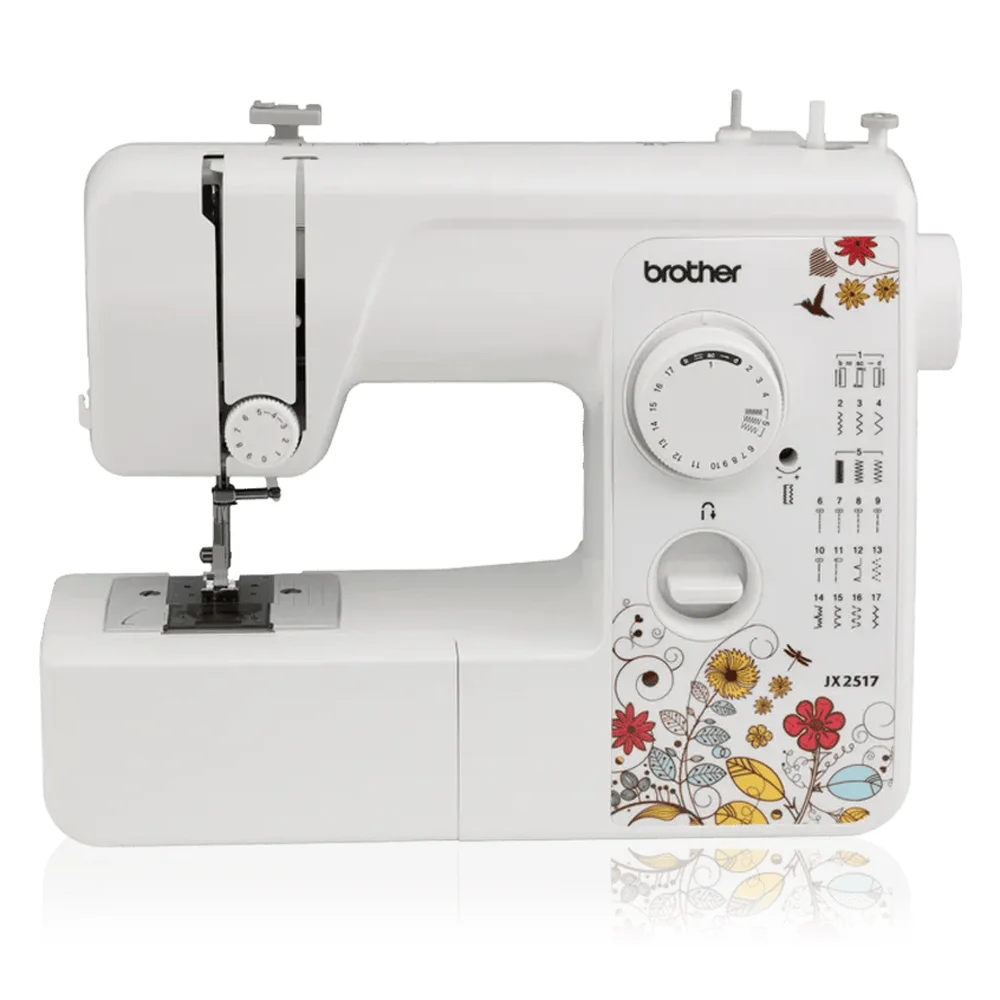
Why it's here Display: None · manufacturer's source
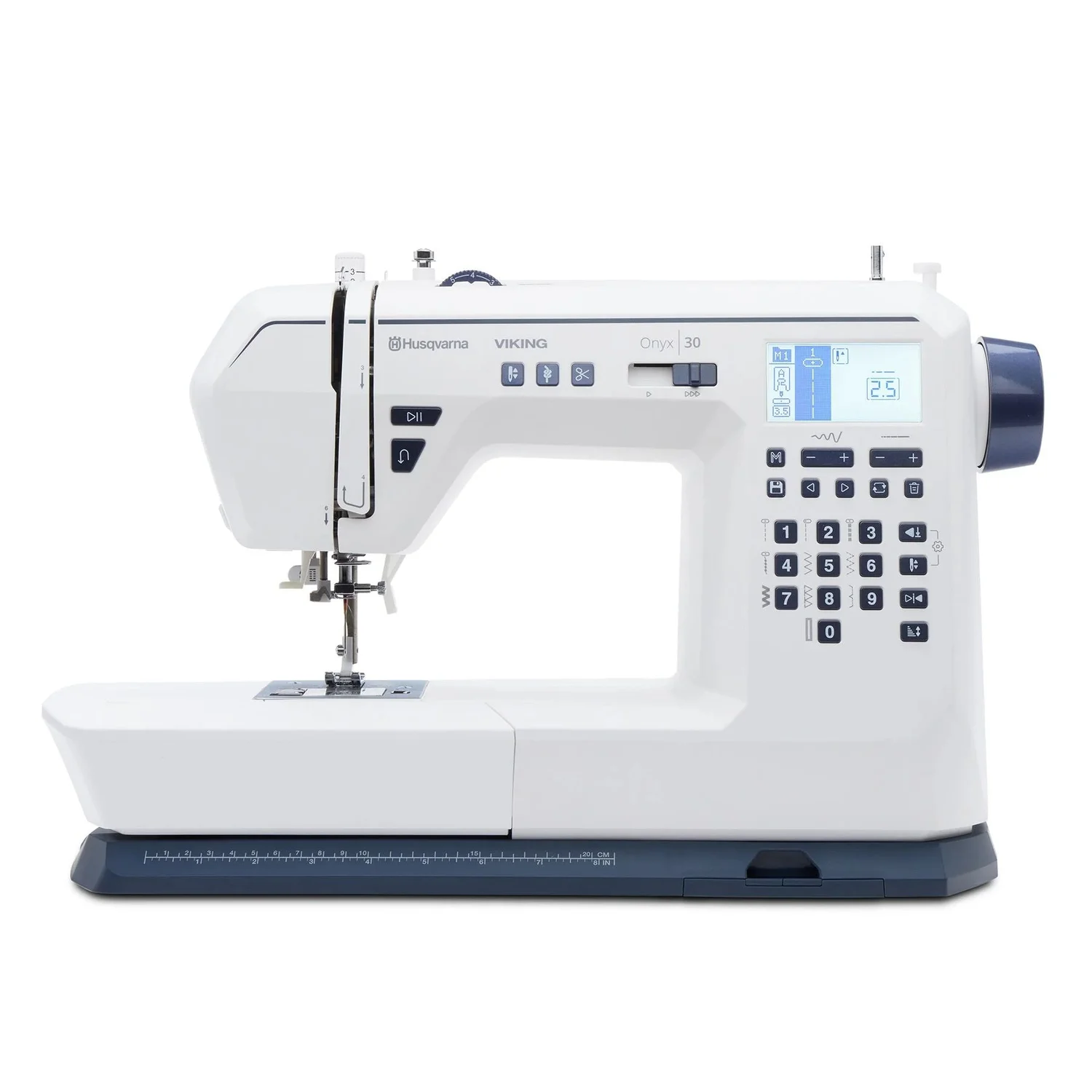
Why it's here Stitch selection: Buttons · manufacturer's source
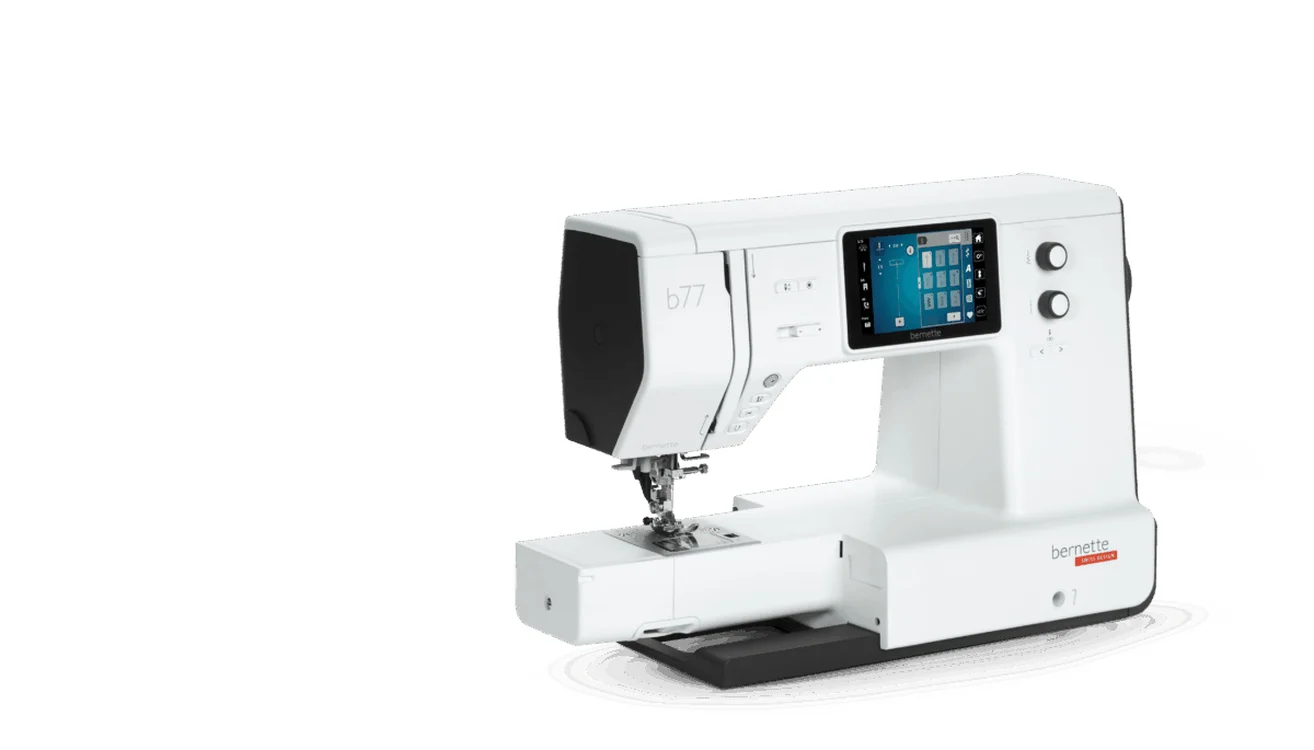
Why it's here Stitch selection: Touchscreen · manufacturer's source