Cleaning and oiling your sewing machine: what the manuals say
Cleaning the feed dogs and hook helps every machine. Oil doesn't: many modern domestic machines should never be oiled, others need it every day. What the manufacturers write, manual by manual.
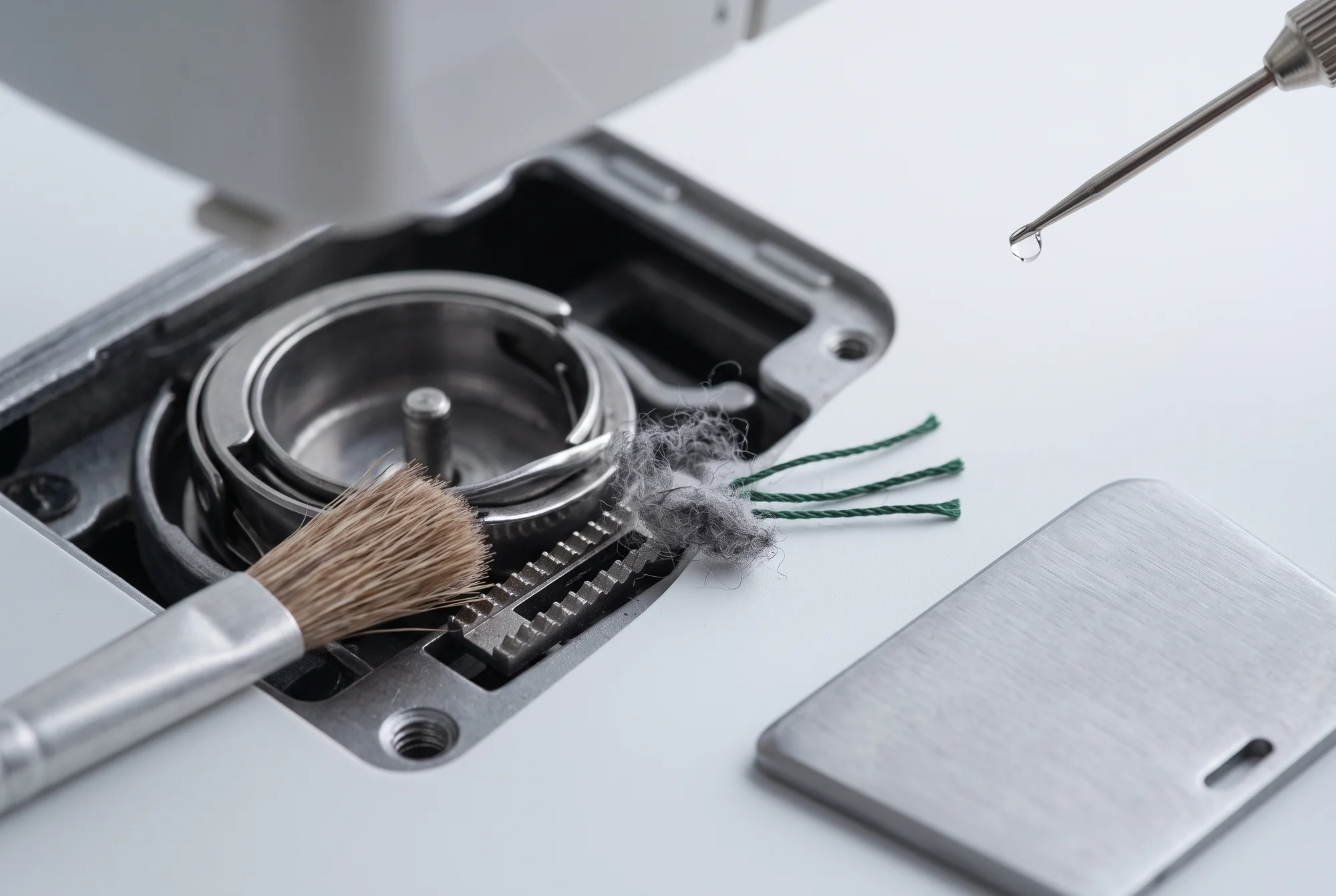
The machine makes a new noise, the stitch comes out uneven, the thread breaks for no obvious reason. Before assuming something's broken, remove the needle plate: underneath you'll very often find a grey felt of lint and bits of thread. Cleaning is the one piece of maintenance every machine needs. Oil is a different matter, and here manufacturers disagree: some forbid oiling, others ask for it every day.
Why lint matters
With every stitch the thread passes through the fabric, and both thread and fabric shed fibres. They collect where the machine forms the stitch: around the feed dogs, the metal teeth that poke through the needle plate and move the fabric forward, and in the hook, the catch under the plate that grabs the needle thread and interlaces it with the bobbin thread.
Brother explains it on the support page for one of its computerised machines: if dust and dirt collect in the hook race or the bobbin case, the machine won't run well and the bobbin thread sensor may fail to react. Elna writes that loose threads and dust can cause puckered stitches and thread breakage, and recommends checking for lint at the end of every project.
How often to clean depends on how much you sew. Manuals give different guidance: Singer and Pfaff say to clean under the plate "after several projects, or when you notice a build-up"; Elna, every time the machine has been used for an extended period; the manual for a Janome mechanical machine with a front-loading bobbin recommends roughly every three months.
What to use, and what not to
On tools, the manuals we read agree:
- the small brush (the one supplied) and a soft, dry cloth; Brother, Janome and Elna also allow a small vacuum cleaner;
- no compressed air: Bernina says not to use spray compressed air, Brother that canned air isn't recommended, and Singer and Pfaff explain why: blowing pushes dust and lint further into the machine;
- no sharp tools near the hook (Bernina) and no solvents on the casing: Janome and Juki recommend a cloth with a little mild detergent.
Brother adds a warning about the bobbin case: if it's scratched, don't use it, because the upper thread can tangle and the needle can break. Take a look at it while you clean.
Oil: it depends on your machine
Here the instructions diverge, sometimes even within the same brand. The table below sums up the manuals we read: each row applies to the machine type stated, not to the whole brand.
| Manufacturer | Machine type | What the manual says |
|---|---|---|
| Brother | sewing, domestic | Not to be oiled by the user: it leaves the factory with the oil it needs. Never oil the bobbin case |
| Brother | multi-needle embroidery machine | One drop on the hook every day before use, one on the needle bar every 40–50 hours of sewing |
| Janome | domestic, top-loading bobbin | "The machine never needs oil"; in another manual: no oil on the bobbin holder or the hook, because it damages the bobbin holder |
| Janome | mechanical, front-loading bobbin | One drop on the shuttle's central pin and its race; a few drops at the internal points two or three times a year, if used continuously |
| Janome | semi-industrial straight-stitch | Two or three drops at three points, once a day if used often |
| Bernina | computerised | One drop in the hook race and one in each of the two felt pads: before first use, after a long period of disuse, every day if used a lot, when the display asks for it, or if the hook is noisy |
| Singer, Pfaff | sewing, domestic | "No lubrication needed" |
| Singer | overlocker | Oil every 24 hours of use |
| Juki | semi-professional straight-stitch | A few drops at the points indicated and inside the hook, once a day if used every day |
| Elna | electronic | The machine is self-lubricating: cleaning is enough |
There's really only one rule: follow your machine's manual, not a general rule. If the manual says oil isn't needed, don't add any: Brother writes that the machine shouldn't be oiled precisely to avoid damaging it, and Janome that oil can ruin the bobbin holder. If the manual does point to lubrication spots, on the other hand, oiling them is part of normal use.
When oiling is called for, the manuals agree on the details:
- only sewing machine oil, ideally the one the manufacturer specifies: Brother warns that another type of oil can damage the machine;
- just a few drops: Bernina reminds you that too much oil stains the fabric and the thread;
- clean first, then oil: Bernina and Juki have you remove the hook or the case before oiling;
- afterwards, sew a test piece on a scrap, which soaks up the excess oil (Janome, Juki, Bernina).
The type of hook can be recognised by where the bobbin goes in: from above in a horizontal hook, from the front in a vertical one. The difference is explained in Rotary or oscillating hook. As of 19 September 2026, of the 58 published sewing machines and sewing-and-embroidery combos in our catalogue, 19 state their hook type: 15 horizontal rotary, 3 vertical oscillating, 1 vertical rotary. This is our catalogue, not the market.
Overlockers and industrial machines
The overlocker produces more lint than a sewing machine, because its knives trim the fabric as it sews: Singer's manual says as much at the start of its maintenance chapter, and calls for frequent oiling because the machine runs at very high speed. For industrial machines the lubrication system varies from model to model: among those in our catalogue that state it, as of 19 September 2026, 6 have automatic lubrication, 6 semi-dry, 1 dry and 2 manual. The model's own manual always applies.
When you need a service centre
Cleaning and oiling don't replace a technician. Brother gives a clear signal: if the handwheel (the wheel on the right side, used to turn the machine by hand) becomes stiff, or the machine makes an unusual noise, stop using it and go to an authorised service centre. Bernina's computerised machines show a message when the scheduled maintenance interval has expired. Consumer Reports, in its buying guide (updated in 2016), suggests a service at least every two years, more often if you sew a lot.
While you clean, check the needle too: a worn needle gives symptoms similar to a dirty hook. When to change your needle explains when; if the problem is tangles of thread under the fabric, start from Thread nests and skipped stitches.
In brief
- Brush the feed dogs and hook with the small brush and a dry cloth, often. No compressed air.
- Before oiling, open the manual: many modern domestic machines shouldn't be oiled, others should, sometimes every day.
- If oiling is called for: sewing machine oil, a few drops, test on a scrap.
- A stiff handwheel or new noises: a service centre, not oil.
Below, step by step, is the cleaning routine common to the manuals we read.
Sources
- Brother, «Where do I put the oil in my machine?» (support, XR3340) — Source 1
- Brother, «Maintenance (Oiling the machine)» (support, PR-1000) — Source 2
- Brother, «How do I clean the machine? (Cleaning the race)» (support, BM3850) — Source 3
- Brother UK, «How do I clean the shuttle race?» (support, Innov-is V3) — Source 4
- Brother USA, «How to clean the bobbin area (race)» — Source 5
- Janome, instruction booklet 5024 — Source 6
- Janome, instruction booklet 5812 — Source 7
- Janome, instruction booklet HD1000 — Source 8
- Janome, instruction booklet HD9 — Source 9
- BERNINA, user manual 570 QE (2023) — Source 10
- SINGER, manual HD 4523 — Source 11
- SINGER, overlocker manual HDS046X — Source 12
- PFAFF, manual expression 715 — Source 13
- JUKI, manual TL-2010Q — Source 14
- JUKI, manual HZL-HT740 — Source 15
- Elna, instruction booklet 3210/3230 — Source 16
- Consumer Reports, «Sewing Machine Buying Guide» (updated on 17/05/2016) — Source 17
Step by step
-
Switch off and unplug
Raise the needle by turning the handwheel toward you, or with the needle up/down button, then switch off the machine and unplug it. Every manual we read asks for this before cleaning or oiling.
-
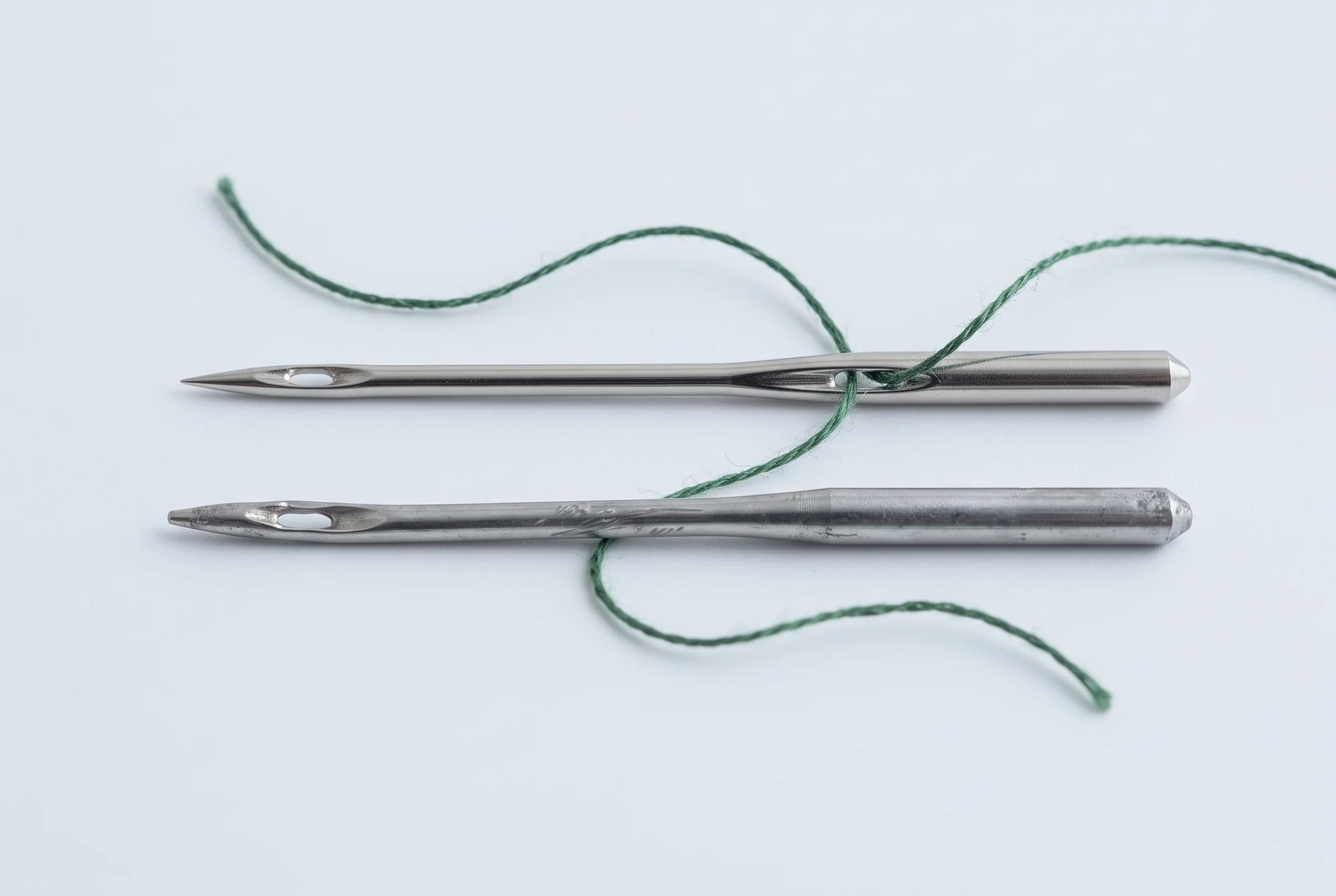
Remove the needle and foot
Loosen the clamp screw and slide out the needle, then remove the foot. If the needle already has several hours of sewing on it, this is the moment to fit a new one.
-
Remove the needle plate and the bobbin case
Unscrew the needle plate's screws with the screwdriver supplied (on some machines the plate just pops off) and lift it away. Remove the bobbin and the case or the bobbin holder.
-
Brush the feed dogs and hook
Use the small brush to remove lint and thread from the feed dogs and the hook race, then wipe with a soft, dry cloth. You can use a small vacuum cleaner; don't blow on it and don't use compressed air, which pushes dust into the machine.
-
Check the bobbin case
Look at the bobbin case: if it's scratched, replace it. Brother warns that a scratched case can tangle the thread and break the needle.
-
Oil only if the manual calls for it
If the manual points to lubrication spots, add the stated number of drops to each, using sewing machine oil. If it says the machine shouldn't be oiled, skip this step.
-
Reassemble and test on a scrap
Put the case back, lining up the reference marks, then the plate, the needle and the foot. Sew a few lines on a scrap: you'll check that everything runs, and, if you oiled it, the scrap absorbs the excess oil.
Three examples from the catalogue
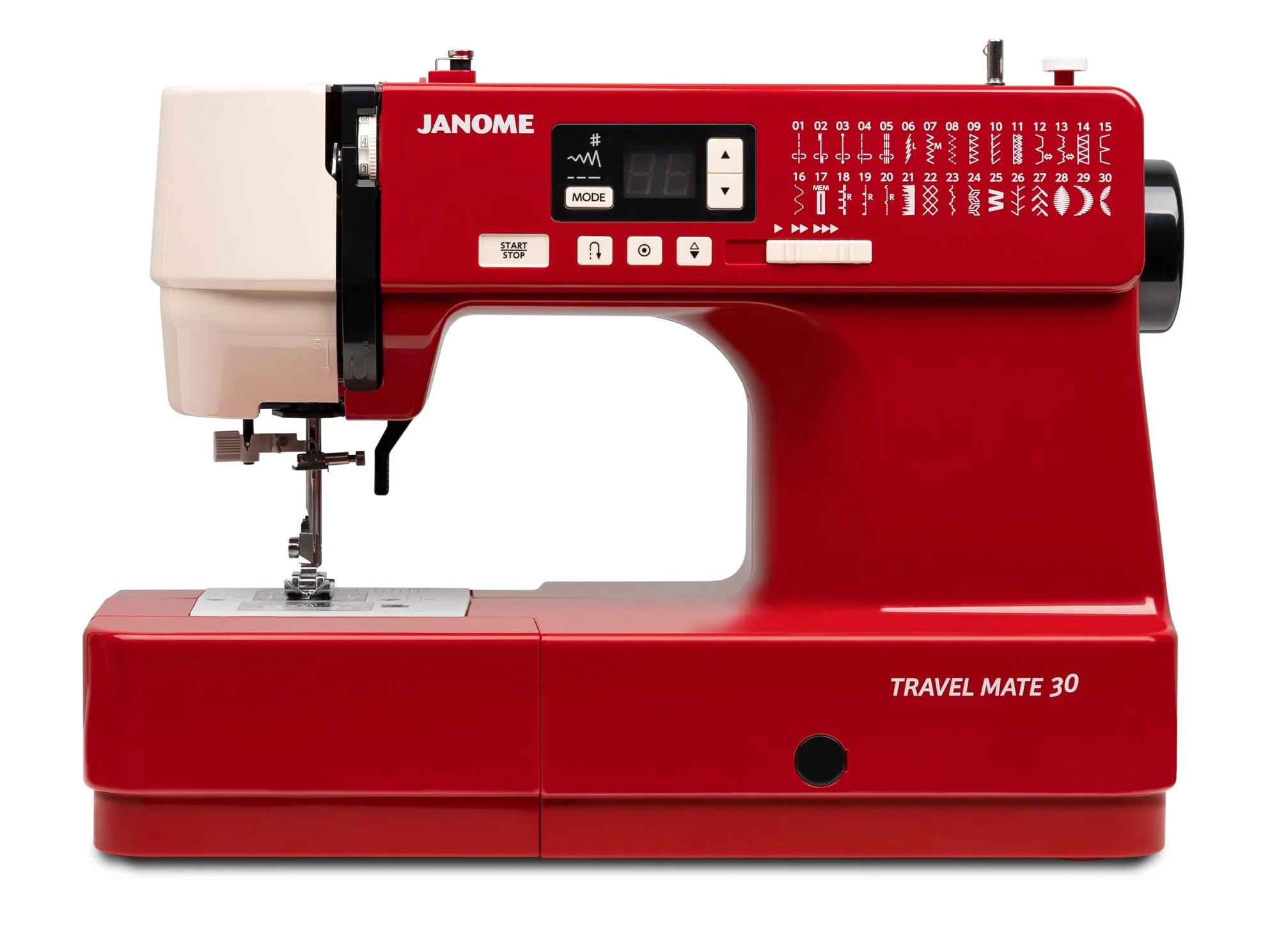
Why it's here Hook type: Horizontal rotary · manufacturer's source
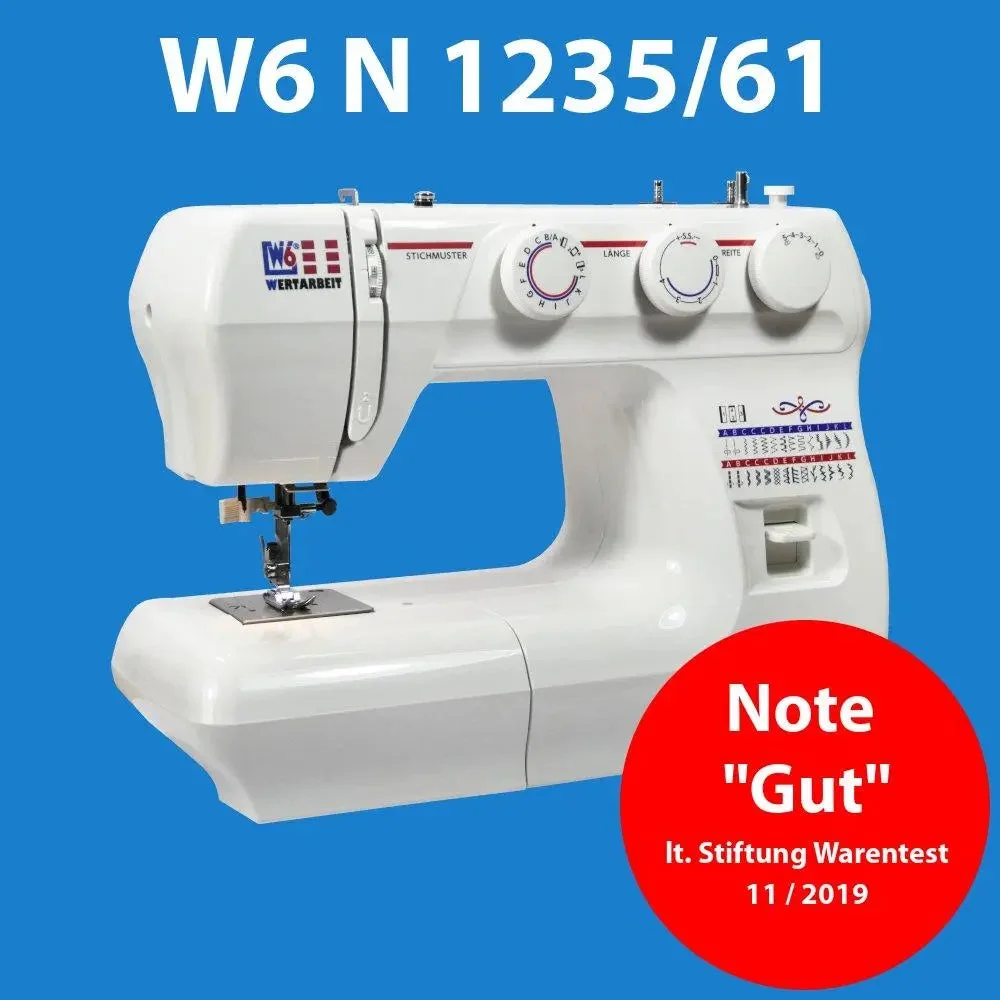
Why it's here Hook type: Vertical oscillating · manufacturer's source
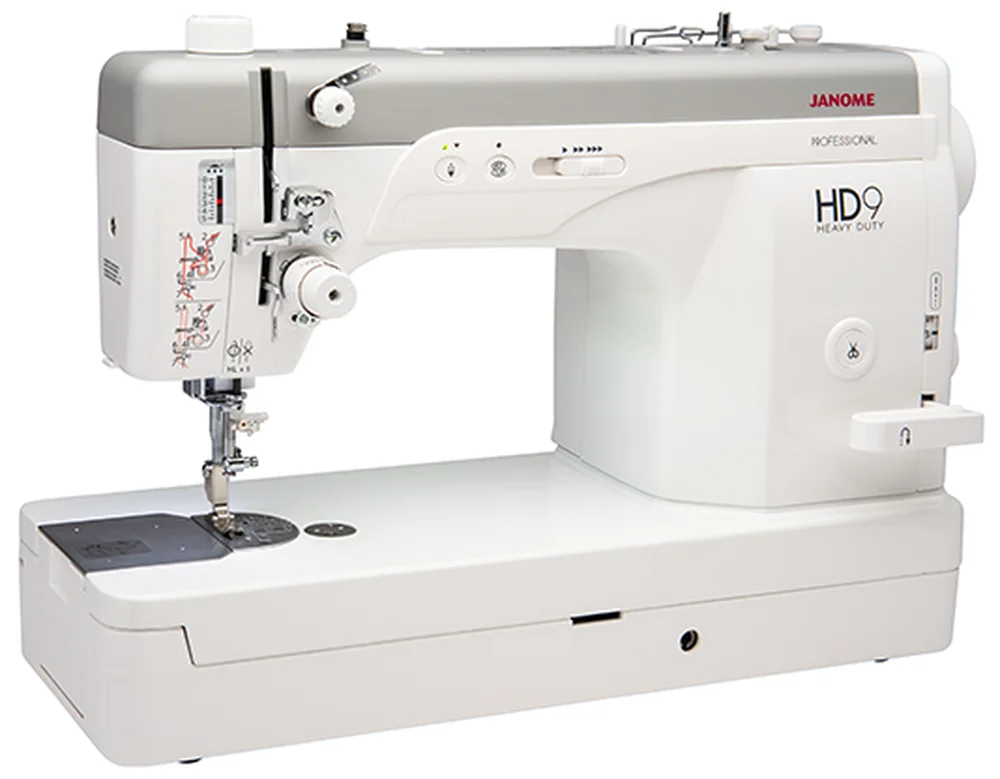
Why it's here Hook type: Vertical rotary · manufacturer's source