Jack JK-58450J vs Juki LH-3568A-7
Technical comparison · Twin needle
Jack JK-58450J and Juki LH-3568A-7 differ in material weight class and needle system: on the measurable specs neither takes the lead, so the choice comes down to which architecture you prefer.
| Parameter |
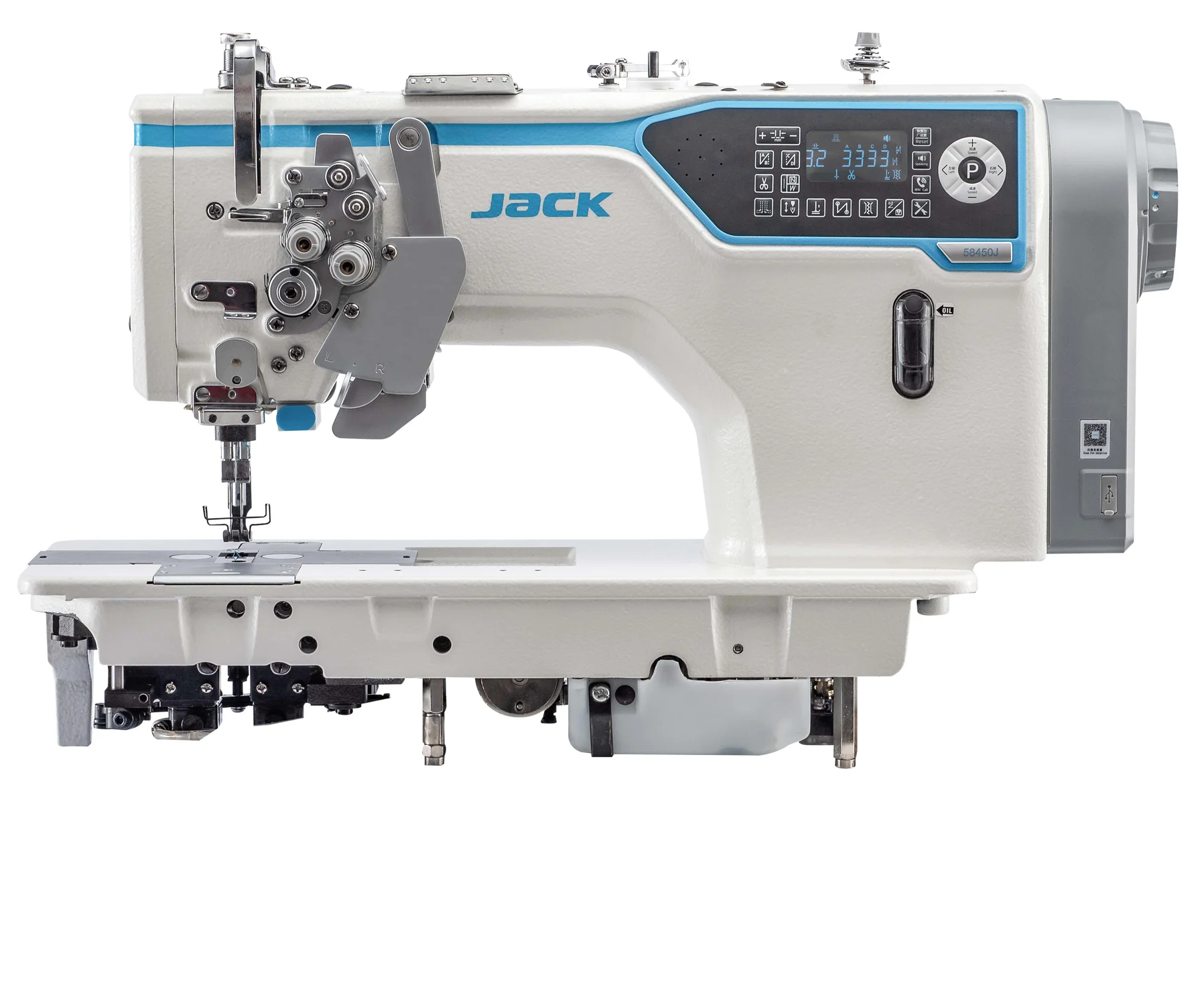 JK-58450J
Jack
F5 · Professional |
 LH-3568A-7
Juki
F5 · Professional |
|---|---|---|
| Identity | ||
| Use tier | F5 — Professional | F5 — Professional |
| Category specs | ||
| Maximum speed | 3000 spm | 3000 spm |
| Material weight class | Light, Heavy | Medium, Heavy |
| Maximum stitch length | 5 mm | 5 mm |
| Presser foot lift (hand) | 7 mm | 7 mm |
| Maximum presser foot lift | 13 mm | 13 mm |
| Needle system | DPx5 | 134, DPx5 |
| Needle distance | 6.4 mm | — |
| Needle size range | 11-16#/14-22# | S: #9~#16, G: #16~#23 |
| Lubrication | — | Semi-dry |
| Motor and drive | — | Direct drive |
| Automatic functions | Automatic thread trimmer, Automatic foot lifter, Automatic backtack | — |
| Hook capacity | Small hook | Standard |
The differences that matter
- Material weight class: Jack JK-58450J Light, Heavy · Juki LH-3568A-7 Medium, Heavy
- Needle system: Jack JK-58450J DPx5 · Juki LH-3568A-7 134, DPx5
- Hook capacity: Jack JK-58450J Small hook · Juki LH-3568A-7 Standard
Which one to choose
Choose Jack JK-58450J if…
you prefer this set-up — hook capacity: small hook.
Choose Juki LH-3568A-7 if…
you prefer this set-up — hook capacity: standard.
This comparison points to the two product pages, where you'll find the complete data and the official links.